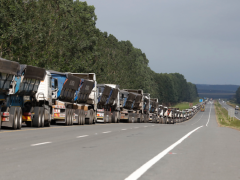
The Federation of East and Southern African Road Transport Associations (Fesarta) is working with stakeholders in the Southern African Development Community (SADC) to develop a model for the sustainability of truck stops. Chief executive of Fesarta, Barney Curtis, told FTW that while there had been press reports about truck stops along strategic SADC trade routes, “it is one thing to identify potential trucks stops, but another to find someone to put up the financing and keep them sustainable”. Walter Hanke, road freight manager for Transworld Cargo, told FTW that truck stops were “a must-have” facility on all major trade corridors, particularly with the increasing number of vehicles on the road and the subsequent congestion and delays. Responding to the FTW article (TKC to get a truck stop makeover, 16 May 2014) about the proposed move by the Trans-Kalahari Corridor Management Committee to establish four new truck stops, Curtis said that it was crucial for the movement of goods to and from southern African countries. “Unfortunately it still has obstacles such as the extra border and the time and cost incurred to get through it,” he said, adding that it is sometimes more efficient to use the Upington route. Since most of the trade is to and from ports in South Africa, travelling via Botswana is a “necessary evil” says Curtis, noting that the Botswana permit is expensive and that the animals along the corridor can be a road hazard. However, some challenges have been addressed he conceded. “The hours of operation at the border have been extended, which means a truck can go right through Botswana on the same day. In addition, the new border at Skilpadshek will speed up transit,” he said. INSERT & CAPTION It is one thing to identify potential trucks stops, but another to keep them sustainable. – Barney Curtis CAPTION Despite its name, the new Skilpadshek border post between South Africa and Botswana is expected to speed up transit times.
Fesarta collaborates on truck stop sustainability
Comments | 0
© Now Media. This content is protected by copyright and may not be adapted or republished. If you would like to discuss cooperation opportunities, please contact: editor@freightnews.co.za.