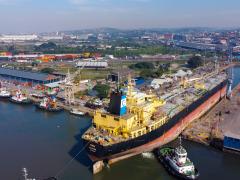
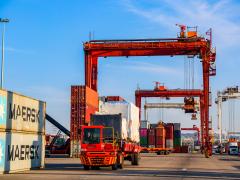
South Africa’s import sector could benefit from the tenuous trade situation between China and the States as it has opened opportunities for the negotiation of lower prices. According to independent analyst Ryk de Klerk, the devaluation of the yuan against the dollar and the fall in new export orders in China and for members of the Association of Southeast Asian Nations (Asean), has placed local importers in a possibly fortuitous position. But in a market affected by currency volatility, oil-price fluctuations, and standoffish trade manoeuvres between leading economies it’s easier said than done. Focusing on business sector activity in Asia and Asean countries, De Klerk said recent data by financial information services aggregator Markit Economics had revealed that several Far East sectors were showing good growth. “The pharmaceutical and biotechnical industry observed the sharpest expansion in output in October, followed by forestry and paper products.” He also identified software and related services for their accelerative strength, adding that technology equipment as well as the food and beverages sector had “found new life again”. Exporters were also well placed to benefit from certain developments out east, De Klerk said. Drawing a finer focus on his assessment of recent data, he remarked that “due to the strength in the forestry and paper products industry and renewed vigour in the beverages and food sector, South African exporters of such products and especially fruit and nuts may gain market share in the Asian markets.” But wiggle room for importers and exporters is unfortunately also affected by a skittish currency. “The rand will remain weak against the major currencies against the backdrop of slower global growth. But at least it will offset the possible further sell-off in commodity prices.” As for the overall global growth perspective, specifically as it affected manufacturing, the picture was certainly not rosy, De Klerk said. In Japan, China, Singapore, Thailand, Myanmar and Indonesia, manufacturing activity had either contracted or markets were “marking time”. “The Nikkei Asean Manufacturing Purchasing Managers’ Index (PMI) released by Market Economics indicated that manufacturing conditions had begun to deteriorate as the countries collectively experienced the sharpest fall in new orders in two years due to subdued demand from overseas markets.” De Klerk said in Japan the situation was so extreme that recent PMI stats showed that manufacturers had “observed weaker demand for the first time since September 2016 while business confidence had fallen for the sixth successive month”. Adding to the overall gloom that seems to be spreading through the Far East region, is Market Economics’ indication that “business confidence in China has dropped to the lowest level since 2009” when the world experienced a global credit collapse. Striking a balance between good and bad, De Klerk also pointed out that there were several factors playing in favour of trade in the Far East. The Olympic Games in Tokyo is already sending flickers of life through Japan’s economy, the Philippines and Vietnam are showing great reserve in growing their economies, and China appears to be weathering the tariff storm US President Donald Trump unleashed. And yet the stimulus measures and possible market interventions from the government of Xi Jinping, De Klerk said, seemed to underscore the prevailing fear that “the fallout of the escalating ChinaUS trade war on the global economy could be much worse than investors and politicians anticipate”. All considered, the Far East trade situation is not easy to navigate at the moment but one that could be beneficial for both local importers and exporters if they subscribe to a mutual notion – proceed with informed caution.
CAPTION
The rand will remain weak against the major currencies against the backdrop of slower global growth. – Ryk de Klerk