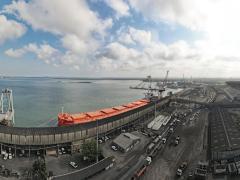
Exporters to the EU should be gearing up for the European 24-hour advanced manifest rule to be enforced from December 31 in all 27 EU member states. As with the US 24-hour rule, the primary purpose of the new regulation is to ensure that a security risk analysis is performed on all goods before they arrive in the EU. Norway and Switzerland have the same status as EU member states. Deutsche Afrika Linien explains that for all cargo entering the EU, the shipping line must submit an Entry Summary Declaration (ENS) to the vessel’s first port of call in the EU. “For a vessel which is bound for an EU port, the ENS transmission must be carried out no later than 24 hours prior to the commencement of vessel loading in the non-EU load port,” the line explains. For “short sea” shipments, the ENS transmission must be carried out no later than two hours before arrival of the vessel at the first port of entry in the EU. An ENS is required for: Goods to be imported • into the EU – i.e. discharge of goods at first or subsequent EU ports. • Freight remaining on Board (FROB) for non-EU destinations. • Transhipment cargo for both EU and non-EU final destinations. • All transit cargo for both EU and non-EU final destinations. “It is the line’s responsibility to electronically lodge the relevant ENS with the customs authority of the vessel’s first EU port of entry, within the allocated deadline. One ENS per bill of lading will be submitted,” a spokesman explained. In order to comply with the deadlines set by the EU customs authorities, shipping lines will need shippers to submit complete and accurate customs declaration information and shipping instructions – well within time. While a third party may submit their own ENS, this can only be done with the prior knowledge and consent of the carrier.
Exporters to EU should gear up for 24-hour security rule
Comments | 0
© Now Media. This content is protected by copyright and may not be adapted or republished. If you would like to discuss cooperation opportunities, please contact: editor@freightnews.co.za.