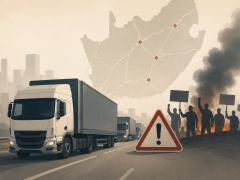
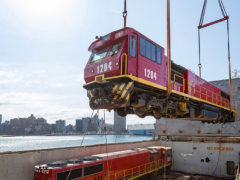
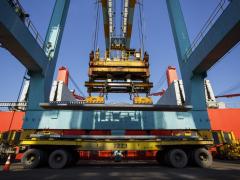
Alan Peat A POSSIBLY expensive oversight for importers is a failure to properly instruct their suppliers of the place of delivery for inland-bound containers, according to Geoff Epstein, internal auditor at Safcor Panalpina. “Manifesting traffic to Johannesburg, for example, obliges the shipping company to arrange rail transport to Johannesburg and for the goods to be cleared through customs at Johannesburg. “If the importer wishes to intercept the cargo at the discharge port, and road haul from there, it is necessary to amend the ship’s manifest.” If this is done, Epstein added, the shipping lines raise an “amending” or “redirection” fee. “Depending on which carrier is involved, this fee can be anywhere between R200 and R700.” One way round this is to manifest cargo to the discharge port only - then arrange road transport from there to final destination. While this avoids the amending or redirection charge, Epstein suggests that importers must take care when making this type of arrangement. “The free period allowed for returning the empties is often shorter at the ports than at inland destinations,” he said. “Importers opting for this type of routing could incur additional rental charges on equipment.” And this “free period” is worth checking up on, Epstein added. The permitted free periods, service fees and other applicable charges payable to shipping lines can vary from line to line. “Also,” Epstein said, “shipping lines’ inland tariffs do differ from one another, and even members of the same conference may have different landside charges.”
Explicit instructions avoid extra costs
Comments | 0
© Now Media. This content is protected by copyright and may not be adapted or republished. If you would like to discuss cooperation opportunities, please contact: editor@freightnews.co.za.