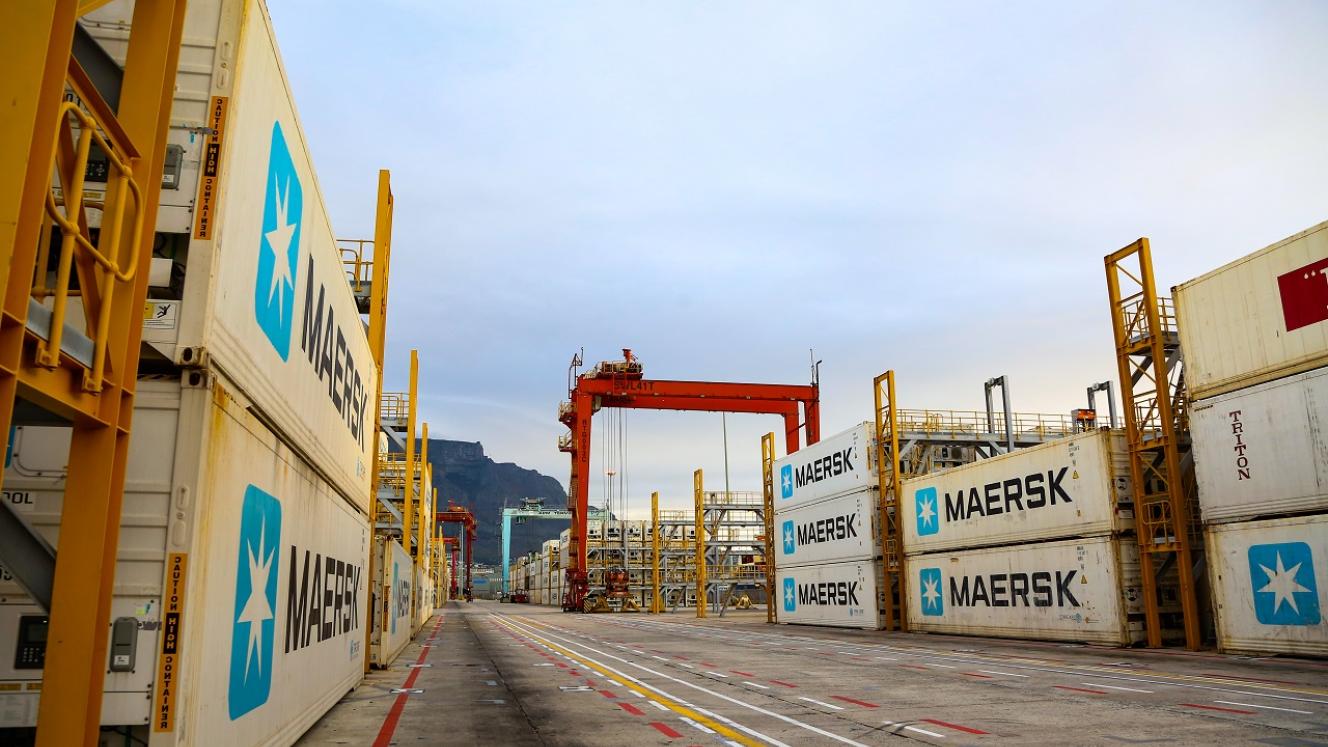
Shipping line Evergreen has launched a new direct Asia- South Africa service (SAF) amidst growing trade volumes and rising demand, as global shipping patterns continue to evolve. The new SAF service will link Shanghai, Ningbo, Kaohsiung, Shekou and Singapore directly to Durban and Cape Town, reducing reliance on transshipment hubs. “The SAF service is the only direct service in the market connecting Central China, Shanghai and Ningbo with Cape Town,” said Ben Chang, Evergreen Agency president. “The service delivers improved frequency with weekly sailings, and a 63-day fixed round-trip schedule, ensuring predictable logistics and supply chain reliability. It also offers transit- time advantages of 14 days from Singapore to Durban, and 27 days from Shanghai to Durban.” He said it had also expanded inland coverage through Evergreen’s Through Bill of Lading network, which extends its reach beyond ports to Gaborone in Botswana and Harare in Zimbabwe. Lesotho, Zambia and Eswatini are expected to be added in the coming months. “The new service will certainly strengthen our Asia-Africa trade corridor presence, enhance supply chain resilience for South African importers and exporters, and position Evergreen strongly for inland southern African markets,” Chang told Freight News. “It will also give Evergreen greater control over schedules, frequency and direct port coverage, improving reliability for shippers moving cargo between Asia and southern Africa.” Evergreen has cited growing bilateral cargo demand and the need for additional capacity between Asia and South Africa as key drivers behind the new service. This growth is increasing demand for direct and reliable shipping services from major Chinese ports to Durban and Cape Town. Recent trends have shown a sharp increase in imports of Chinese vehicles, machinery, electronics and consumer goods into South Africa. Chinese automotive brands in particular have expanded aggressively in the South African market, driving higher cargo volumes. “As manufacturers, retailers and automotive distributors increasingly rely on just-in-time supply chains, shipping lines are expected to provide more predictable services on high- growth trade lanes such as China- South Africa trade,” said Chang. “Africa is becoming a strategic growth market with trade volumes rising rapidly,” he said. “Evergreen is increasingly focusing on Africa as growth slows or becomes more volatile on traditional east- west routes, whilst emerging markets and evolving regional trade patterns reshape Evergreen’s network strategy.” He said South Africa was especially important because it acts as a gateway to inland southern African markets such as Botswana, Zimbabwe, Zambia, Lesotho and Eswatini through rail and road logistics networks covered under Evergreen’s Through Bill of Lading service. Durban, in particular, remains one of the most important cargo gateways into southern Africa, said Chang. “It is still the region’s dominant maritime hub for containerised trade and serves not only South Africa, but also several landlocked neighbouring countries.” The port handles the majority of South Africa’s container traffic, making it one of the busiest container ports in Africa and connecting major global shipping routes linking Asia, Europe, the Middle East and the Americas. According to Chang, while Durban’s strategic importance has recently been challenged by operational problems, congestion, ageing infrastructure, equipment shortages and port inefficiencies that reduced reliability and increased shipping delays over the past few years, it is still held in extremely high regard. “It remains the gateway to southern Africa because of its scale, infrastructure base and geographic position. Recent initiatives and projects are showing signs of operational recovery. We are hoping to see even more infrastructure upgrades and logistics reforms put in place.” He said global shipping disruptions were transforming southern Africa from a peripheral maritime region into a more strategically important corridor in global trade. “Changing trade policies are significantly reshaping shipping lines’ network decisions in southern Africa. Shipping lines are redesigning trade routes, altering port calls, increasing contingency planning and investing in new regional hubs.” LV
Evergreen’s cargo volumes increase as Asia-Africa trade corridor strengthens
Comments | 0
© Now Media. This content is protected by copyright and may not be adapted or republished. If you would like to discuss cooperation opportunities, please contact: editor@freightnews.co.za.