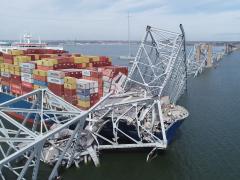
'Allow enough lead time between order and installation' AN ESCALATION in the number of claims on imported machinery is causing major headaches for all parties involved. Whether it’s the result of a strong rand-driven increase in the number of machines imported or a deterioration in handling standards, or both, is not clear. What has become rather obvious is that importers and freight forwarders need to start tightening up their risk management controls, says Eikos Risk Applications’ managing director Victor Tabosa-Vaz. The problems are varied and exist on both sides of the ocean – from vehicles driving into bridges without checking on the height limitations, to incorrect use of lifting lugs by forklift drivers, with top-heavy loads keeling over. “Insurance must be seen as a backstop to correct risk management,” says director Hugh Reimers, and importers should be putting mechanisms in place to ensure qualified contractors are used to pack, mark, lift and move these goods. “It’s also extremely important to allow enough lead time between order and installation,” says Reimers, “as inevitably when damage occurs time is needed to effect repairs either here or overseas.” Here an inadequate marine insurance policy could compound the problem, if suppliers’ warranties are not taken into consideration. “Importers far too often tend to underestimate the impact of even slight damage on lead times, and when these lead times are eroded there is a natural tendency for importers to favour the re-ordering of a new machine, which is where potential problems arise. Insurers have the contractual rights to insist on cost-efficient repairs versus replacement. This type of situation, more often than not, leads to significant post loss conflict between all parties.” It’s getting to the point where insurers are beginning to consider machinery an unacceptably high risk, says Reimers. “The importer’s responsibility starts right up front when the order is placed," says Vaz. “The people they employ to move the machinery must be reputable. It can’t be a purely cost-driven decision. “Importers must instruct suppliers to ensure that handling is facilitated in the best possible manner, and this includes the marking, packing and everything that makes the movement clear, easy and correct.” A proactive stand, including a lead time contingency plan, is clearly the route to go to avoid messy claims which often run into millions of rands and sometimes take several years to resolve.
Escalation in machinery claims demands proactive stand
Comments | 0
© Now Media. This content is protected by copyright and may not be adapted or republished. If you would like to discuss cooperation opportunities, please contact: editor@freightnews.co.za.