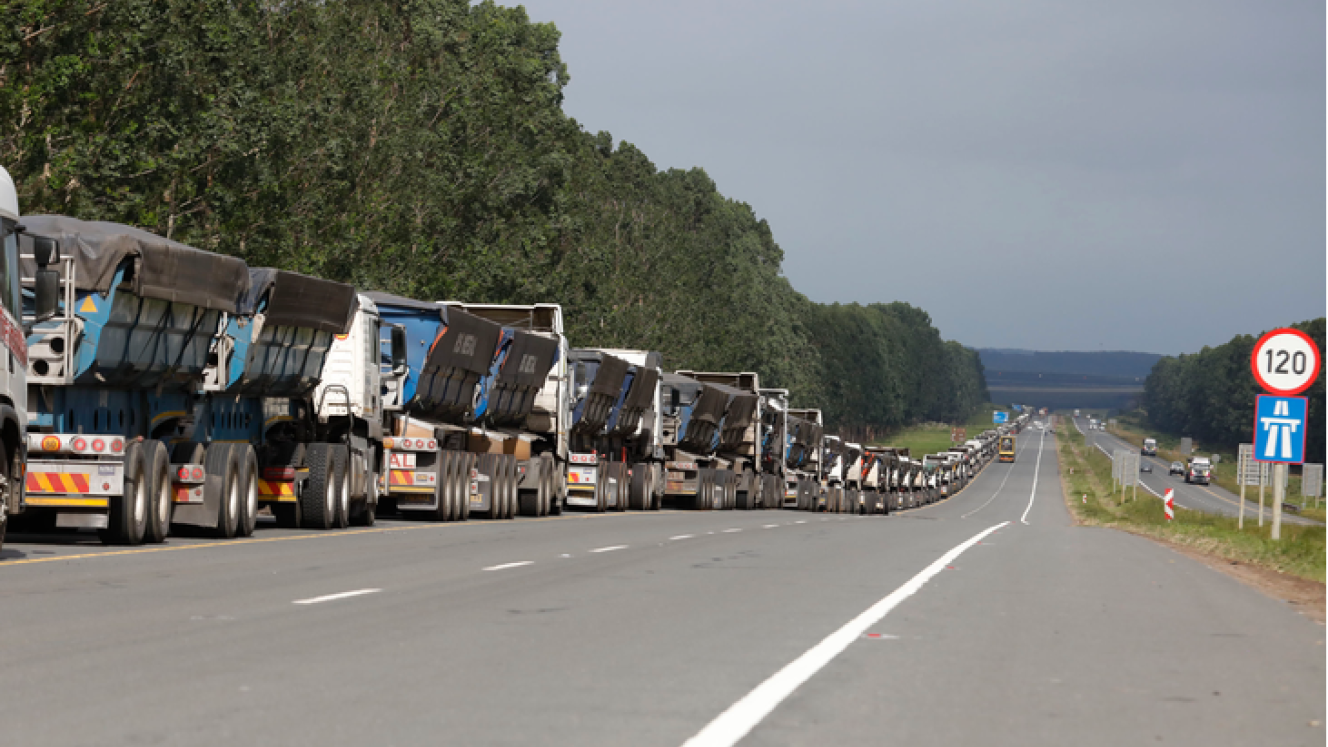
South Africa’s reliance on imported diesel is probably one of the biggest risks facing the logistics sector – especially in light of fuel being the biggest component of ever-increasing transport costs In the latest State of Logistics survey, compiled by the University of Stellenbosch, Imperial Logistics and the Council for Scientific and Industrial Research (CSIR), transport is identified as the biggest contributor to overall logistics costs in the country. And its vulnerability to a volatile exogenous cost driver – the price of crude oil – does not bode well. “The fuel bill for logistics has risen sharply in the past few years. In fact the fuel bill for this country has doubled,” said Dr Jan Havenga of the University of Stellenbosch. And the cost of transport has been further exacerbated by the cost of the various externalities – accidents, emissions, congestion, noise and policing, all items that are not on the logistics bill at present. “These externalities, however, will find their way onto that bill. It is coming like a great big interlink and it is going to hit us hard. Calculating the real cost of logistics, which will include these externalities that currently are being borne by society and are not cross-subsidised, will some time in the very near future be charged to shippers and carriers. It is imminent.” It is therefore essential that the country finds new and innovative ways of improving logistics and especially transport, he said. “America and Europe are not going to save us. They are going to stop buying our goods as the carbon footprint is becoming too high; the cost of fuel is too much – we are just too far away. We are going to have to learn to manage our supply chains better while at the same time finding ways of improving efficiencies.” INSERT & CAPTION America and Europe are not going to save us. They are going to stop buying our goods as the carbon footprint is becoming too high. – Dr Jan Havenga
Escalating fuel bill demands creative solutions
Comments | 0
© Now Media. This content is protected by copyright and may not be adapted or republished. If you would like to discuss cooperation opportunities, please contact: editor@freightnews.co.za.