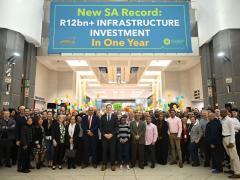
Government’s goal of attracting over one trillion rand worth of investment over the next three years will fall woefully short if it does not nurture entrepreneurship, support the creation of manufacturing efficiencies, and address funding bottlenecks.
This was the view of panellists at the recent Manufacturing Indaba held at the Sandton Convention Centre. Joint MD of Cova Advisory & Associates, Tumelo Chipfupa, said that for local industrialisation to attract investment it had to be of a high global standard which required government support in terms of funding, skills development and research and development in new “cutting-edge” technologies.
Merafe Moloto, founder and CEO of Moloto Capital Investments, agreed. While acknowledging assertions by Department of Trade and Industry deputy director-general, Malebo Mabitje-Thompson, that government had “made great strides” in strengthening the local supply base and investing in skills and development, she pointed out that it had failed to nurture entrepreneurship.
“We as a company help entrepreneurs and producers to get their export products to market and we have seen that small and medium businesses have challenges around accessing the support,” she said. There were major bottlenecks around the issuing of grants which created problems with traditional financing from banks who were loathe to provide funding without the grants, she added. “It can take up to three months to receive grant funding and often that identified gap in the market has then already been filled by someone else.”
Moloto pointed out that the current tax regime was onerous and timeconsuming, especially for businesses who could not afford the resources needed to comply. Chipfupa added that not enough support was provided for exporters around market opportunities.
“Most businesses are ignorant of the opportunities offered by bilateral trade agreements between countries and they don’t know where to even look,” he said.
Both panellists agreed that without government support, there would be a widening of the trade deficit gap and that South Africa would continue to lose key industrialisation knowledge and skills, making it a less attractive investment destination.