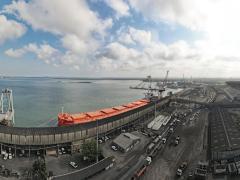
And then there were 28 On 01 July 2013 the Republic of Croatia became the 28th member of the European Union (EU). This is significant for South Africa as it concluded a Trade, Development and Cooperation Agreement (TDCA), which includes a Free Trade Agreement (FTA) with the EU. In 2003 Croatia applied for EU membership and the European Commission (EC) recommended making it an official candidate in early 2004. In mid-2004 the European Council granted Croatia candidate country status. The entry negotiations, while originally set for March 2005, began in October 2005 together with the screening process. The accession process of Croatia was complicated by the insistence of Slovenia, an EU member state, that the two countries’ border issues be dealt with prior to Croatia’s accession to the EU. Croatia finished accession negotiations on 30 June 2011 and on 09 December 2011 signed the Treaty of Accession to become a member. A referendum on EU accession was held in Croatia on January 22, 2012, with 66% of participants voting in favour of joining the Union. The ratification process by the parliaments of all 27 EU member states was concluded during June 2013. The International Monetary Fund (IMF) classifies Croatia as an emerging and developing economy whilst the World Bank identifies it as a high-income economy. It is a member of the World Trade Organisation (WTO) and the World Customs Organisation (WCO). The service sector dominates Croatia’s economy, followed by the industrial sector and agriculture. Tourism is a significant source of revenue during the summer, with Croatia ranked the 18th most popular tourist destination in the world. Trade Remedies due to expire On 28 June 2013 the International Trade Administration Commission of South Africa (Itac) announced that unless a duly substantiated request was made by or on behalf of the Southern African Customs Union (Sacu) industry indicating that the expiry of the trade remedy duty would be likely to lead to the continuation or recurrence of dumping, subsidise exports or lead to injury, the following trade remedy duties would expire. Anti-dumping duties imposed on wire ropes, classifiable in tariff subheading 7312.10 imported from or originating in China, Germany, Republic of Korea (South Korea) and the United Kingdom which are due to expire on 12 February 2014. Anti-dumping duties imposed on gypsum plaster board, classifiable in tariff subheading 6809.11, imported from or originating in Indonesia and Thailand, which are due to expire on 05 March 2014. Anti-dumping duties imposed on stainless steel sinks, classifiable in tariff subheading 7324.10, imported from or originating in Malaysia and the People’s Republic of China (China) which are due to expire on 05 November 2014. A countervailing (antisubsidy) duty imposed on wire ropes, classifiable in tariff subheading 7312.10, imported from India, which is due to expire on 12 February 2014. Sacu manufacturers who wish to submit a request for the trade remedy duties to be reviewed prior to the expiry thereof should do so by no later than close of business on 29 July 2013.
DUTY CALLS
Comments | 0
© Now Media. This content is protected by copyright and may not be adapted or republished. If you would like to discuss cooperation opportunities, please contact: editor@freightnews.co.za.