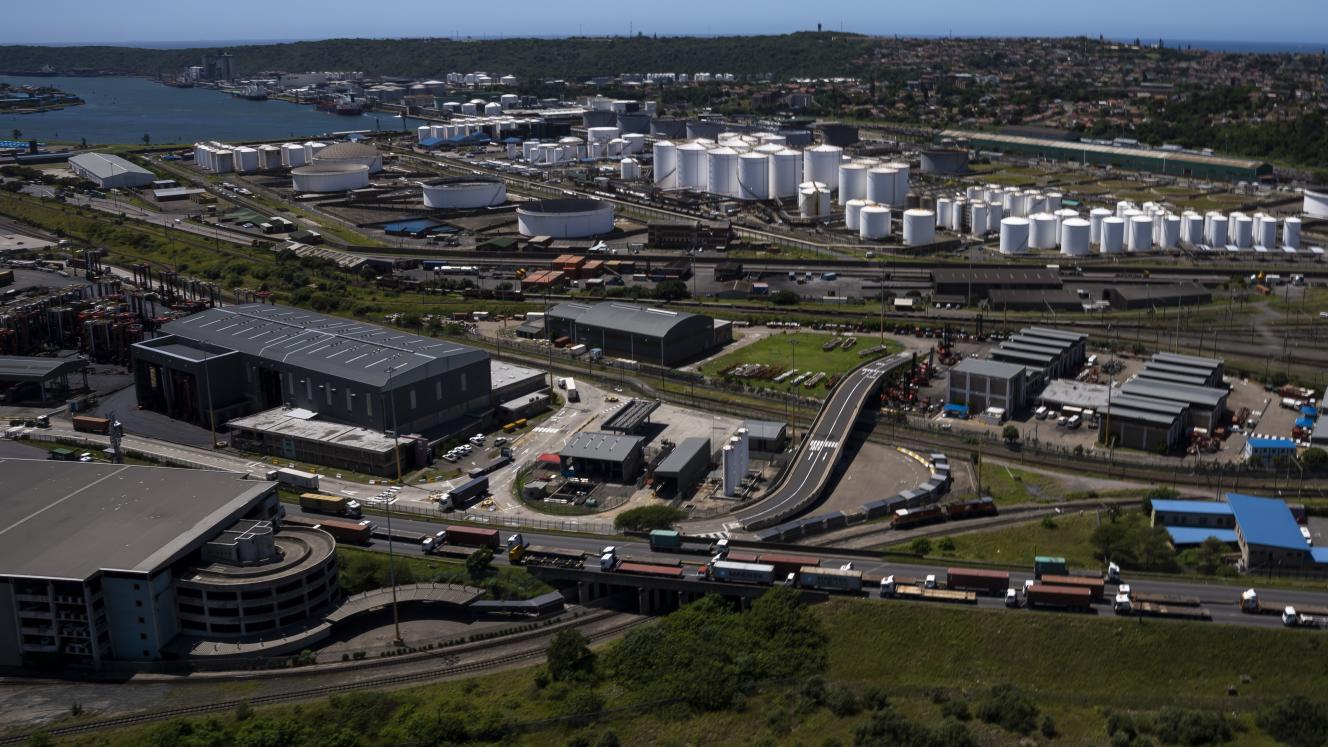
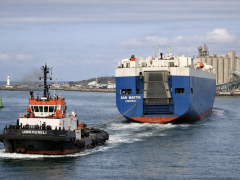
The Port of Durban is still clogged up, with shipping lines continuing to complain about lengthy waiting times for their ships, and truckers about standing in queues for hours. FTW has been listening to loud moans about ships suffering from five to six-day average berthing delays, and trucks three to five hours average turnaround times. A ship’s agency executive said that because of this, container deliveries were still very slow. “We’re certainly not considering lifting the congestion surcharge till we’re sure that the quays are back to normal,” he added. Iain McIntosh, marketing manager of Mitsui OSK Line, told FTW that Cape Town and the Eastern Cape ports had more or less emerged from the post-strike chaos, but Durban still had a high berthing delay. “You’re finding your berthing time being continually pushed back because the terminals are jammed up, and nobody really knows how long this is going to last.” To avoid this five to six-day berthing delay, the Pacific International Line (PIL) Durban management team has been busy looking for every opportunity to berth smaller vessels on the Point quays and Maydon Wharf, according to MD Ivan Naik. “This allows us to get them away just that bit quicker,” he said. Rhett van Zyl of CMA CGM Shipping Agency, told FTW that he thought Transnet was doing its best to clear up the backlog, and that some importers weren’t helping things along because they were not clearing their boxes quickly enough. “But,” he said, “we’re still sitting with a five day delay for vessels, and the port productivity is not good as it should be. The Transnet Port Terminals (TPT) says it’s because of a flood of import boxes jamming up the terminals.” The port is still trying to recover from the strike, said Paul Rayner, MD of container road transporter, DTB Cartage. “The backlog’s enormous,” he added, “and there are still ships anchored outside waiting to come in.” He reckoned that stack utilisation was just far too high. “And,” he told FTW, “when it exceeds 70%, the landside just completely grinds to a halt. “This means that delays remain completely unacceptable – at two to three hours on a good day.”
Durban still playing post-strike catch-up
Comments | 0
© Now Media. This content is protected by copyright and may not be adapted or republished. If you would like to discuss cooperation opportunities, please contact: editor@freightnews.co.za.