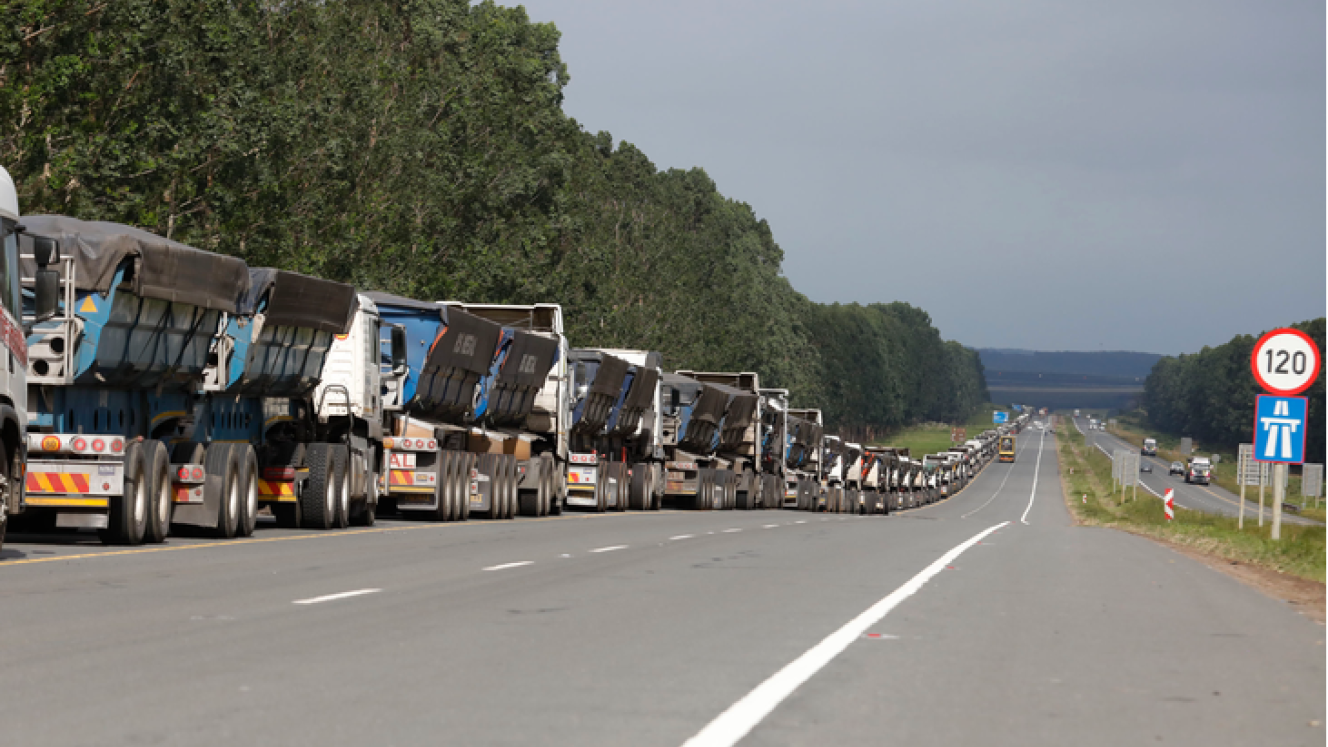
Addressing the major cargo imbalance that currently exists in the Southern African Development Community (SADC) would mean less cargo moving through the Port of Durban and more being directed to ports such as Dar es Salaam, Walvis Bay and Beira. While this would probably be a blow to South Africa in the short term it would be beneficial to the region, ultimately benefiting the country in the long run, said Nadia Viljoen, a senior researcher at the Council for Scientific and Industrial Research. “A major cargo imbalance exists in the region as negligible cargo volumes return from SADC through South Africa for export. This cargo imbalance and the additional transport burden due to using the Port of Durban as the primary gateway, drive up the cost of logistics,” said Viljoen. She said research had shown that approximately 60% of cargo volumes imported through South Africa to SADC are destined for Zambia, the DRC and Angola, while the remaining 40% are for Zimbabwe, Mozambique and Malawi. It is estimated that 48% of these volumes are transported by road from the Port of Durban, while 52% move via coastal shipping. Viljoen said SADC was bedevilled by its poor regional connectivity. “Logistics costs as a percentage of GDP in Africa are estimated at 30% – extremely high when compared to South Africa’s 12.8%, which is already considered high.” The only way to address this, she said, was to develop dedicated, multi-national trade and logistics corridors that would ultimately allow for a better f low of cargo across the region in a more balanced and cost-effective manner. But, said Viljoen, this was dependent on the region being able to ensure adequate infrastructure was in place at ports and that regional corridors were being developed. “At the same time governments must create environments that are conducive to lucrative public private partnership that will attract the private sector,” she said. “Correcting the cargo imbalance is just as important to bring down logistics costs. However, correcting this imbalance is not only a transport issue but an underlying trade and development one.” Other areas of concern that would need to be addressed include long and drawn-out cross border movements hampered by delays, often as a result of cumbersome paperwork where human error is high due to the lack of IT systems that speak across countries. “SADC does hold potential for business development and foreign direct investment with many developed countries – but it is going to have to address its legacy of poor connectivity,” said Viljoen.
'Durban should forfeit cargo to correct SADC imbalance'
Comments | 0
© Now Media. This content is protected by copyright and may not be adapted or republished. If you would like to discuss cooperation opportunities, please contact: editor@freightnews.co.za.