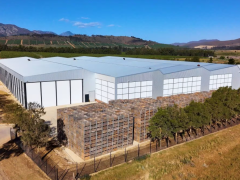
South Africa remains the hub for Africa, especially in terms of containers, as the larger vessels still utilise the country’s ports more frequently than any others – but service levels are worrying. According to Dennis Trotter, regional director for SACD Freight in Gauteng, the African future is very promising as the demand for minerals in the Far East continues to grow, but service at the Port of Durban should be addressed if the country wants to benefit from the boom. “In Gauteng we are very involved in the consolidation of minerals coming from the DRC and Zambia. We consolidate, containerise and move containers to the port by road or rail, always giving preference to rail. We have 33 000 sqm of warehouse on our 13-hectare site and can handle block trains through our siding which we recently expanded to cope with future rail growth in both imports and exports,” he said. The expected growth on the African continent also led the company recently to take delivery of a new reach stacker, while an empty container handler and two terminal tractors are on back order. “South Africa as a hub for Africa is very important to our export customers as the large volume of vessels calling at the Port of Durban offers sailing opportunities to most global destinations as well as more frequent sailings than can be offered by any other African port,” said Trotter. “It is disappointing at present to find service levels in the port at such a low ebb, creating doubt in the minds of the owners of cross-border cargo as to whether or not a to change to another port. This situation is, I am sure, only temporary due to the roll-out of the Navis system but it has to be quickly reversed in order to save the many jobs dependent on these exports.” He says it is important that port service levels improve and revert to normal, as the potential for growth in Africa is immense. “We have to be part of this growth. We have the infrastructure to offer logistical solutions and capitalise on all opportunities that present themselves, creating much-needed foreign exchange and job growth.”
‘Durban needs to sort out congestion problems now’
Comments | 0
© Now Media. This content is protected by copyright and may not be adapted or republished. If you would like to discuss cooperation opportunities, please contact: editor@freightnews.co.za.