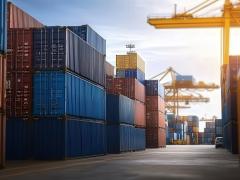
The Port of Durban handled 76.7 million tonnes of cargo during the 2010/11 financial year ended March 31,2011, which was an increase of 6.8% on the previous fiscal year (71.8mt). Containers handled by the country’s busiest port amounted to 2 572 450 TEUs which was up 135 419 TEUs or 5.5% on 2009/10. The volumes quoted by weight here include a calculation for the 2.5 million containers based on 13.5 tons per TEU, necessary because Transnet NPA does not include these by weight as it previously did, thus distorting any comparative examination of the various ports’ progress over the years. Collectively South African ports handled 4 090 787 TEUs, up 12.2% on the 3 646 787 TEUs handled in the 2009/10 fiscal year and a total volume of 253.795 million tonnes of cargo, compared with 236.076mt the year before. One can analyse port statistics to death and come up with various scenarios but the reality is that container growth at the country’s largest container terminal appears to have slowed in comparison with some of the other ports. The real growth was in the Eastern Cape, at Ngqura in particular, but even Port Elizabeth managed a small growth on last year. Volume-wise Durban handled 30.24% of total cargo handled at South African ports, and 62.87% of the containers measured in TEUs. In this respect Durban appears to be holding its position against the other ports and the cargo owners of Gauteng are continuing to use Durban as their port of choice for imports and exports, despite recent claims that Durban is one of the most expensive ports within the regions doing business with South Africa. Richards Bay handled a total cargo of 84.93 million tonnes, compared with 80.44mt the previous year, a 5.58% increase. The giant Richards Bay Coal Terminal shipped 63.43 million tonnes of coal for the calendar year (62.29mt fiscal years), leaving the rest of the port to handle 22.64mt of bulk and breakbulk cargo.
Durban growth slows compared to other ports
Comments | 0
© Now Media. This content is protected by copyright and may not be adapted or republished. If you would like to discuss cooperation opportunities, please contact: editor@freightnews.co.za.