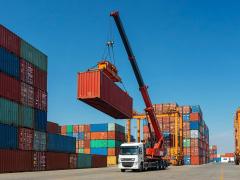
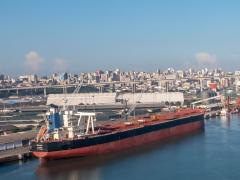
The South African Association of Freight Forwarders (Saaff) has declared a “crisis” at the privately operated Durban Gateway Terminal (DGT), saying operational and equipment constraints have “choked the flow of cargo” through the port.
“The impasse at Durban Gateway Terminal, which emerged following the transition to DGT’s independent Navis N4 system and has been compounded by wider operational, equipment, yard and coordination constraints, has severely constrained operations and choked the flow of cargo,” Saaff said in a statement on Friday.
The association said the relevant port structures had been unable to contain and resolve the situation, prompting it to escalate the matter to President Cyril Ramaphosa’s office on behalf of the freight industry.
Saaff added that it had outlined the extent of the disruption and its effect on freight forwarders, cargo owners, producers and service providers.
“This is now a crisis, with severe knock-on effects spreading rapidly across the national supply chain,” it said.
Saaff said a Presidency delegation had visited the port on Friday to assess the situation and support efforts to mobilise an appropriate response.
“The delegation was fully briefed by Saaff on behalf of industry.”
Presidential spokesperson Vincent Magwenya clarified that the visit involved two officials from the Presidency’s Project Management Office.
“Only Rudi Dicks from our PMO and one colleague went to get a sense of progress and challenges at the Durban Gateway Terminal,” Magwenya said on Friday.
According to Saaff, its immediate priority is to restore fluidity across the terminal and its connected logistics chain.
It called for coordinated intervention across waterside, yard, landside, rail and back-of-port operations, rather than the optimisation of individual activities in isolation.
The association said industry should be directly represented in the intervention and recovery process, while container flows needed to be restored urgently.
“Costs arising from system and operational delays beyond industry’s control cannot simply be transferred to cargo owners, freight forwarders or other affected parties, including through avoidable storage and demurrage charges.”
The call for intervention follows International Container Terminal Services Inc’s (ICTSI) acquisition of a 49% stake in the terminal for an undisclosed amount.
ICTSI took over operations at Durban Container Terminal Pier 2, now known as DGT, on January 1. Transnet retained a 51% majority stake in the 25-year joint venture, which is intended to revitalise infrastructure and operations at a terminal that has struggled with equipment shortages and congestion for more than a decade.
Saaff said it had shared proposed solutions and corrective measures directly with Transnet.
These included restoring booking capacity and container evacuation, improving stack fluidity and accuracy, increasing equipment availability and using capacity elsewhere in the port where practical.
The measures also included strengthening rail integration and addressing storage and demurrage costs arising from circumstances beyond cargo owners’ control.
The industry has also called for regular, verified operational communication, including headline performance indicators that would allow the wider supply chain to plan according to actual terminal conditions.
Saaff said structures for prevention, early warning and rapid intervention should be established beyond the immediate recovery period. It also called for private-sector operators to participate in an integrated industry planning framework.