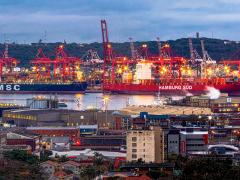
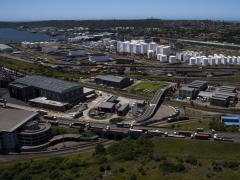
Container terminal bears brunt of strike action Terry Hutson DURBAN CONTAINER Terminal (DCT) faces a six-week backlog following last week's two day ports strike on October 1&2. While the strike had less of an impact than feared, (DCT) was most severely affected with a 90% stayaway. And if that hasn't been enough, even the weather is conspiring against normality. Last week Durban closed its port twice because of strong winds and swells. This is at least the fifth time the port has closed this year, something port users say is almost unheard of. During the strike other terminals at Richards Bay and Durban reported normal operations with a high turnout of personnel, while marine services provided a full tug and pilot service. The story at DCT, however - Africa's busiest container terminal - was very different. The 90% stayaway led to a virtual stoppage of operations. It was almost as if this terminal, which has been earmarked for the first concessioning, has been specially targeted for union action. "This is a peak period for the shipping industry, which under normal circumstances would place capacity pressure on the terminal," said Mark Gregg-Macdonald, acting CEO of SA Port Operations (SAPO). He added that the terminal was already contending with a two-day backlog. "We have put in place an action plan to clear the backlog as quickly as possible, and have engaged industry to assist the terminal in clearing the backlog." Gregg-Macdonald said the cost of the strike could not be accurately determined at this stage as costs and loss of revenue were not limited to those incurred during the two-day stayaway. "The business recovery plan that we have outlined will not happen without incurring substantial additional costs which will continue to cost SAPO and the industry as a whole for the duration of the recovery period." More strike reports on page 16.
Durban faces 6-week backlog
Comments | 0
© Now Media. This content is protected by copyright and may not be adapted or republished. If you would like to discuss cooperation opportunities, please contact: editor@freightnews.co.za.