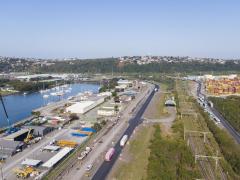
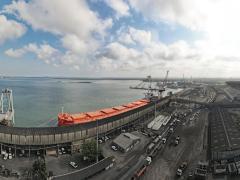
There appears to have been a slight easing of congestion at the Port of Durban following punishing delays earlier this month – many of them related to the recent implementation of Navis – that saw some shipping lines by-passing the port. MSC’s marketing director Glenn Delve told FTW last week that there was still congestion on certain berths but that it had largely improved. “We expect a 2-5 day delay depending on the berth,” he said. DCT terminal executive manager Moshe Mothlohi told FTW last Friday that there had been improvements in volumes handled over the quay side, truck turnaround times and rail volumes. The main issues with the Navis system, he said, were around fine-tuning the parameters. “We have system developers working on those while international experts are mentoring our employees – and this will run until the end of September.” Head of the Durban Harbour Carriers’ Association, Kevin Martin, agreed that Navis appeared to have bedded down a lot better. “A major system change of this nature will always take 8-12 weeks,” he told FTW. While the programme developers provided good theoretical processes, practical implementation will always present challenges. “At Heathrow Airport, when they opened their new terminal, they managed to lose half a million suitcases in one day – and that’s with the best IT brains in a first world country.” And Martin believes that TPT is doing the best it can under the circumstances. “The situation is being monitored on a weekly basis and Moshe and his team at DCT are possibly the best available to Transnet at the moment,” he said. “Everything we do is targeted at making sure that we have a smooth peak – which starts in August,” said Motlohi. While he did not commit to specifics on when a congestion-free scenario could be expected, he said several interventions had been put in place to address the problems. “We have set up Navis implementation focus interventions. We monitor critical areas of our business and we have set up improvement targets, developing specific actions to deliver those targets.” Hopefully this will achieve the desired results, which was not the case earlier this month when Mitsui OSK Line was forced to bypass Durban to avoid the crippling berthing delays for one of its vessels. The line’s frustrations clearly resonated for several other carriers who expressed concern to FTW that the lines were continuing to bear the brunt. “What I find very frustrating,” said an industry source who preferred to remain anonymous, “is that TPT keeps on tabling the same solutions which are obviously not working. “For example they state that they will divert all geared container vessels to either Maydon Wharf or Point. However reality is that they do not have adequate resources to work more than two vessels at a time at Point despite the fact that they have three berths. “It would be very easy to man up for a third berth at Point but TPT seems reluctant to do this and lines are often charged extra if they do make a plan. Surely it is in TPT’s interests to do this.” This week’s FTW Online poll (see below) reflects the impact of Durban’s poor performance on the industry at large. Hopefully the benefits of Navis will soon begin to reflect in improved port performance – to the benefit of all.
Durban congestion improving
Comments | 0
© Now Media. This content is protected by copyright and may not be adapted or republished. If you would like to discuss cooperation opportunities, please contact: editor@freightnews.co.za.