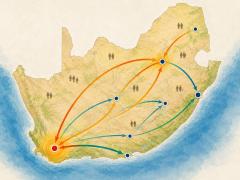
T he drought damage to the Western Cape’s agricultural sector was already estimated at around R15 billion, said Agri-Wes Cape CEO Carl Opperman. Opperman told FTW the agricultural sector had been hit hard by the drought and the situation was fast reaching crisis point. He said in the Ceres area alone the limited water supply had resulted in 50% fewer onions and 80% fewer potatoes being planted this season. “This impacts food production and results in wage losses of millions of rands for seasonal workers. It may also potentially influence the consumer in price increases. The value chain needs raw product from producers and if it can’t be provided, there is a negative domino effect on the total community,” he said. “Two tomato canning factories in Saldanha Bay have also ceased operations. Job losses of 4 000 to 6 000 are predicted for this West Coast town and surrounds.” Opperman said with no water available for the after-crop irrigation of orchards and vineyards the situation would have an impact on next year’s harvest as well. “Hundreds of hectares of citrus trees have been cut back and hundreds of hectares of orchards have been pulled out in an effort to save water. Indications currently are that the deciduous fruit crops will be 20% smaller. This means fewer seasonal workers will be employed for a shorter period of time. Therefore an estimated 50 000 seasonal workers will have lower than normal income or no income at all.” The fruit industry is also the largest contributor, by value, to South African agricultural exports. “The industry has a high job-multiplier effect and creates thousands of jobs in the value chain. The industry is also an important generator of very valuable foreign currency inflows, which are now also under pressure.” According to Opperman it is not just the summer fruit and vegetables that are affected. “Grain yields in the winter producing regions have been far below average. In some areas north of Moorreesburg, producers had no yield at all. Producers between the Metropole and Moorreesburg had average to below-average yields. Between Moorreesburg and the Sandveld there were no yields, at all or far below average yields while the Rooi-Karoo area also had no yield at all or far below average yields.” He said meat producers had been totally reliant on drought relief since November 2015. “There is no more roughage available in the Western Cape. Grazing and feed shortages resulted in massive culling, causing local red meat supply to tighten, and meat price increases as a result of the drought-induced supply shortages. To date 5% of livestock and 22% of sheep herds have been slaughtered in the province. Only one third of normal silage will be available and that impacts the dairy sector,” he said. According to Opperman the agricultural sector's water supply has already been curtailed by between 60% and 87% to date and in some areas even 100%. In February restrictions will be tightened even more. “This puts pressure on the socio-economic and economic well-being of the rural areas and the value chain, which in turn puts pressure on the state coffers,” said Opperman. “The present work streams on drought and water supply are in the process of quantifying the effect on the economy as a whole.” He said while efforts were under way by the government to assist farmers the situation was concerning.
Drought-stricken agri-industry faces jobs crisis
Comments | 0
© Now Media. This content is protected by copyright and may not be adapted or republished. If you would like to discuss cooperation opportunities, please contact: editor@freightnews.co.za.