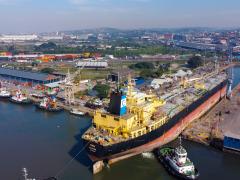
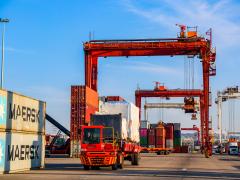
More and more development corridors are being established across the southern African region as a tool to support economic integration as most believe this is the only way to open up markets and promote increased trade and investment. According to Barney Curtis, executive director of the Federation of East and Southern African Road Transport Associations (Fesarta), this forms part of the Southern African Development Community (SADC) decision to focus on corridors rather than countries. “The focus on corridors is because they are the lifelines to the landlocked countries and interventions often straddle more than one country. There is considerable mineral and agricultural wealth available in the hinterland and moving these commodities in the future will require improved corridors. Hence the focus on upgrading the infrastructure along the corridors.” Possibly the largest and most successful development corridor initiative thus far in southern Africa, the Maputo Development Corridor, has proved what can be done when a corridor is efficient. According to Barbara Mommen, chief executive officer of the Maputo Corridor Logistics Initiative (MCLI), corridors have a significant impact on the competitiveness of local business and regional economies as they can provide a measure of predictability, reliability and efficiency which are crucial to trade and logistics supply chains, apart from which they are key to providing access to markets. “In our experience, the ability to address the issues affecting trade in a transport corridor approach has given a significant level of comfort to users and has resulted in significant economic growth in this region,” she told FTW. “Corridors need good infrastructure, good systems and procedures, good information, and an institutional mechanism which can act as the facilitator and interface between users and the public sector. Good co-operation between the public and private sector is essential to ensure sustainable success.” Curtis agrees saying if not efficient, the cost of moving goods only increases making them less competitive on the global market. “The first element is to have an effective and efficient corridor management institution (CMI) to drive the process towards making the corridor more efficient,” he said. “This is more difficult than it appears, since it requires a person who will drive the process. Furthermore, there has to be a costeffective way of funding such an institution.”
‘Development corridors the answer to economic integration'
Comments | 0
© Now Media. This content is protected by copyright and may not be adapted or republished. If you would like to discuss cooperation opportunities, please contact: editor@freightnews.co.za.