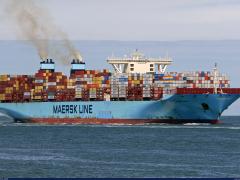
Developing countries across Africa and Asia have become more dependent on increasingly costly food imports in the wake of the commodity boom, according to figures released by the United Nations Conference on Trade and Development (Unctad). Shipping companies are kept busy carrying tons of bulk ore, coal and wood out of the countries which have benefited most from the commodities boom, while transporting rice, wheat, maize and consumer goods on the inbound leg. According to Unctad research, the net food import bill for Eastern Asia has increased six-fold when the period 1999-2001 is compared with 2009-2011. Western Asia’s food imports grew 3.2 times, and those of North Africa 2.6 times. In monetary terms, African food imports rose by US$14.3 billion, and in Asia the negative balance is US$37.8 billion. “Developing America” was the only region to reverse the trend, with the food import bill dropping by US$70 billion. Prices for wheat and rice climbed 170% between 2000 and 2012, and the price of maize rose by more than 200%. Developing countries have managed to retain growth in gross domestic product thanks to the commodities boom, which saw non-oil commodity price indices remain at historic heights in 2012, or some 2.4 times their average during the period from 1960 to 2012.
Developing countries trade food for commodities
Comments | 0
© Now Media. This content is protected by copyright and may not be adapted or republished. If you would like to discuss cooperation opportunities, please contact: editor@freightnews.co.za.