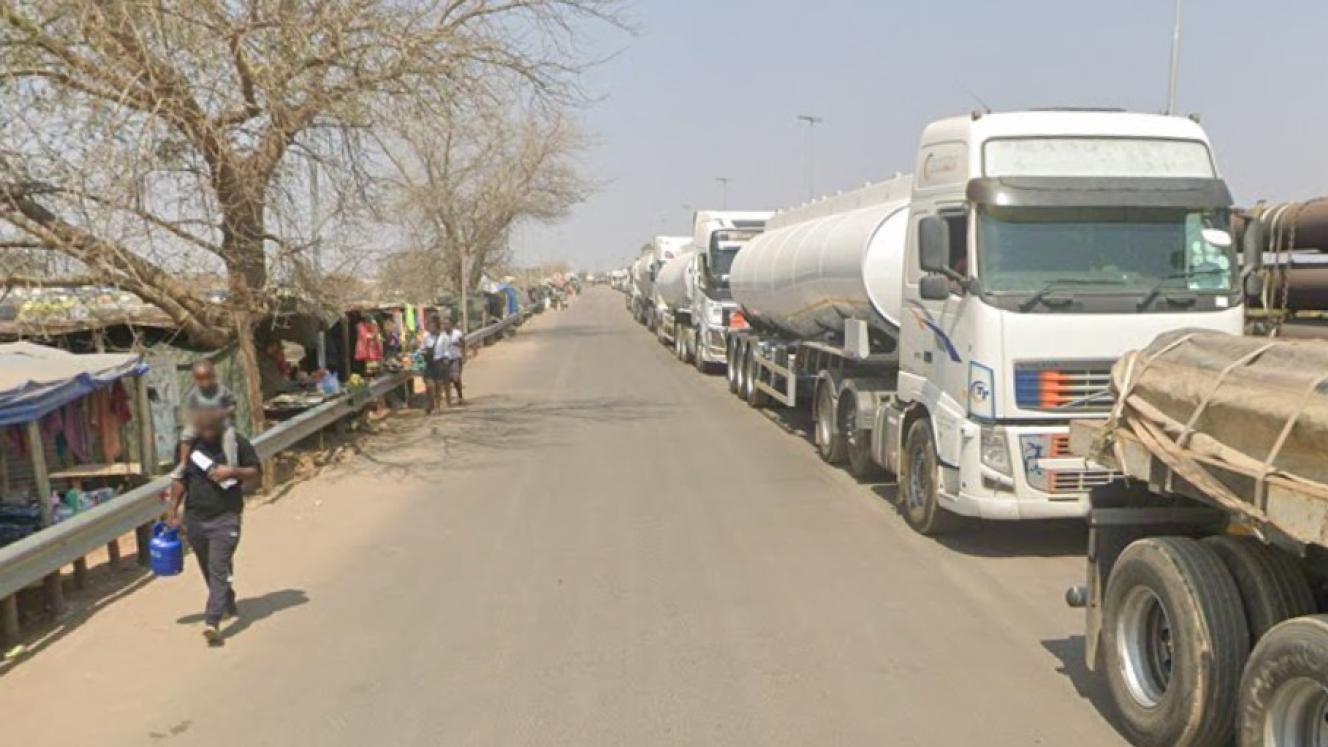
With transporters into Angola reporting difficult seaport conditions, hair-raising road use tales, and frustration at sluggish customs procedures, the question “Why bother?” can be answered with a simple reply: “It’s the economy.” True, seven years after the country’s devastating civil war concluded in 1992 the economy is moving from a very low point, but Angola’s real growth rate of 13.2% in 2008, down from an amazing 19.6% in 2006 because of a global economic slump that dampened demand for Angolan oil, is the fourth highest in the world. Growth in industrial production last year was 14.3%, ranking it number one. That’s right, Angola had the world’s highest industrial growth rate, and transporters know it. They are the ones who ship industrial inputs up from SA or arrange sea transport from the EU and US. Much of what is moved is for the oil sector, which comprises 85% of industrial activity. Angola is the world’s 17th largest oil producer, pumping out 1.91 million barrels of oil a day of its estimated reserves of nine billion barrels. Shipments overseas account for a lopsided export/import profile. Angola’s exports were $67 billion last year, up from $44 billion in 2007, while imports stood at $17 billion. With the country’s 2764-km long railway system still inadequate from decades of conflict, the choice for shippers is road, air and sea. Angola may have 211 “airports,” but only 30 have paved runways. 51 500 km of roads criss-cross a country that is 12.3m square km in size, but as road freight haulers know only 5 350 km is tarred, and the tarring can often be problematic. Rains and flooding take their toll on roads, making muddy quagmires of the untarred majority and submerging the rest, particularly in the interior plateau areas. “We transport a lot of foodstuffs into Angola,” says Moses Abbosey, whose firm Royal Gold Shipping Agency felt the country was an attractive destination and started service there two years ago. And he’s not alone in following the allure of an obviously buoyant economy, shipping perishables and other foods to not only oil installations but also shops. Surprisingly for a country with an intense November to April rainy season, less than 3% of land is arable, and agriculture accounts for only 9.2% of GDP. Half of the country’s food has to be imported. No wonder the one bright spot for transporters dealing with Angolan customs is that pre-clearance of perishable products is allowed. “For other goods,” explains Paul Cunliffe of 4PL.COM Logistics Cape, “a four to five day process at the border should be normal. If a situation arises with clearance documents, it can be four to five weeks. But longer can happen.” The language (Portuguese of course is spoken) can be a challenge. “We recently moved a load of synthetic juice powder. We have a guy at the border who translates all our documents. Angolan customs saw ‘orange’ and ‘raspberry’ and wanted certification for fruits. They wouldn’t accept the argument that the product was synthetic. The truck stood at the border for two months until it was resolved,” Cunliffe recalls. What would help move road freight along is a common clearing ground at its main border post used by inbound truck traffic from SA. One road freight hauler reports: “What happens now is the trucks go to a holding area 30 km from the border. There are no stores, no facilities there. We have an agent who goes to our trucks on a daily basis, gives the drivers news and gets updates, takes shopping lists and checks visas.” Acquiring visas can be a challenge in itself, and complications arise if a truck is stuck at the border. Visas are single entry and expire in 30 days. If a truck is held up for more than a month it may also be the driver who is stranded. “These fees get passed onto the customer who can’t understand why it is so expensive to ship to Angola,” said the road freight operator. So, why bother? The attraction of Angola is more than transport opportunities offered by the oil and gas industry. Angola’s population of nearly 13 million is also emerging from a time of want, and represents a potent consumer market. Already much of Angolans’ food needs must come from abroad, and transporters report growing volumes in consumer goods. They also report an improving road infrastructure, efforts to address port congestion, and other signs that government understands that postwar reconstruction and widespread prosperity to match the fortunes of the oil sector cannot be achieved without literally paving the way for the transport industry.
Despite appalling infrastructure, opportunity beckons
Comments | 0
© Now Media. This content is protected by copyright and may not be adapted or republished. If you would like to discuss cooperation opportunities, please contact: editor@freightnews.co.za.