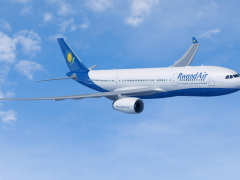
FOR ZAMBIA this year is particularly important. It is celebrating possibly the oldest and most revered British adventure tourist, a mystery that points a finger at early Cold War chicanery and of course its fourth decade of independence. Spearheading this convergence of anniversaries is the “Visit Zambia 2005 Campaign” which aims to take the country’s tourism capital, Livingstone, to the rest of the world. It represents the centenary of the town of Livingstone on the banks overlooking the mighty Victoria Falls on the Zambezi River as well as the 150th anniversary of the first sighting of the “the smoke that thunders” to interpret the falls’ indigenous name by the man that lends his name to the town, David Livingstone. Already British Airways has reduced fares by up to 30% for tourists flying from the UK to visit Zambia as its contribution to this campaign. More sinister but closer to the heart of freight is the other anniversary, the 1905 birth of Dag Hammarskjöld, Swedish secretary general of the United Nations, who was killed when his aeroplane crashed outside Ndola on the Zambian Copperbelt on the night of September 17, 1961. Hammarskjöld was on a mission to try to resolve the emerging crisis in the Congo that ultimately resulted in a worst case scenario for emerging African independence – United Nations ineptitude, military mutiny, mercenaries, internecine strife and a healthy dollop of Western and Eastern bloc dough to keep the right man at the helm of the country that is today the Democratic Republic of the Congo (DRC) and remains mineral rich but perpetually poor. Speculation is still rife about the cause of the crash, given Hammarskjöld’s mission to resolve a conflict that effectively pitted East and West influence a year before even the Cuban crisis.
Debt relief, mineral wealth and export diversification lead Zambia’s economic resurgence
Comments | 0
© Now Media. This content is protected by copyright and may not be adapted or republished. If you would like to discuss cooperation opportunities, please contact: editor@freightnews.co.za.