South Africa’s road freight sector is facing a growing mix of regulatory, security and operating pressures, with employment equity enforcement, Aarto implementation, organised crime and rising diesel costs all adding to the strain on operators.
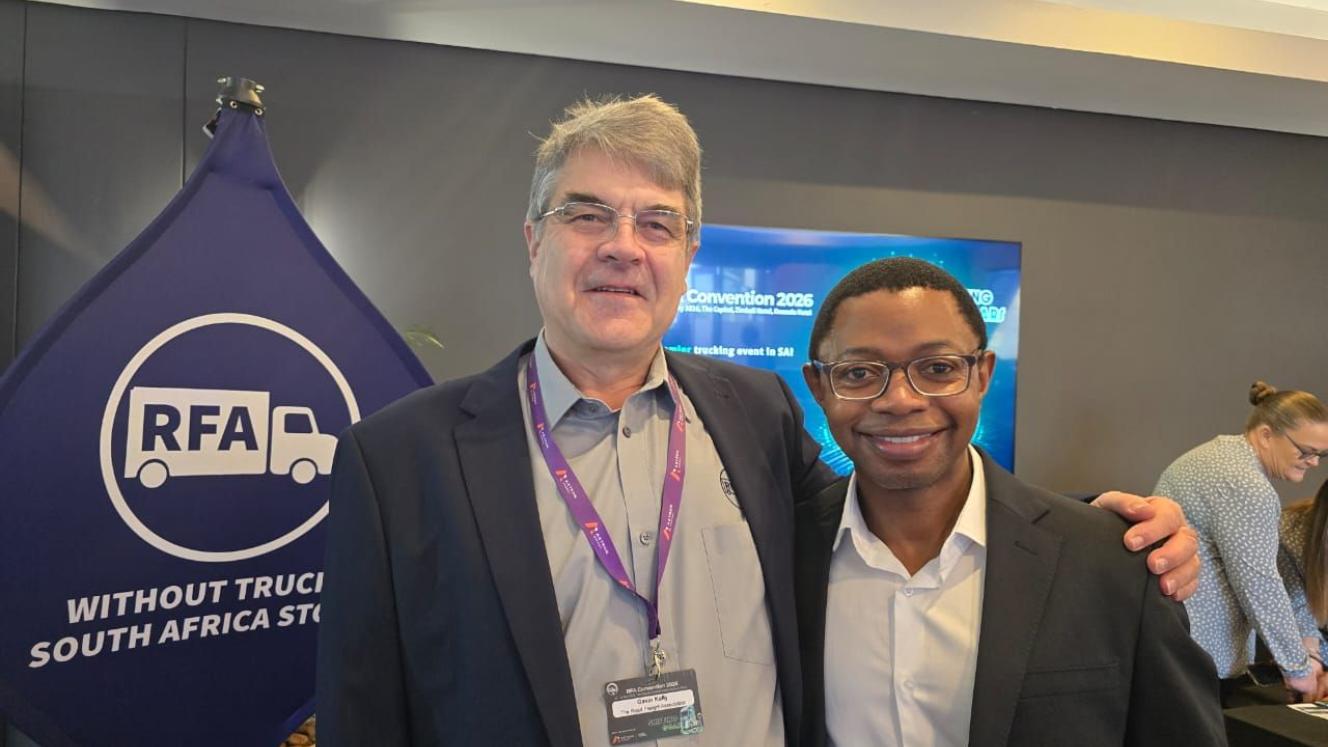
These pressures were raised at the Road Freight Association (RFA) Convention 2026, held at The Capital Zimbali over the weekend under the theme Shifting Gears.
Several regulatory and operational headwinds could be expected, said RFA CEO Gavin Kelly.
Employment equity enforcement was expected to tighten over the next two years, he said. “The Department of Employment and Labour said they’re going to start harsh implementation in 2027, so we’ll see where that goes.”
The association was also monitoring the splintering of the All Truck Drivers Forum (ATDF) into factions, as well as the Administrative Adjudication of Road Traffic Offences (Aarto) Act, which is slated to take effect from July 1 despite a lack of official gazettes, Kelly said.
He criticised Aarto’s proposed demerit structure for vehicles, which links offences to operators. “We’ve said you cannot penalise vehicles. Nowhere else in the world is this done,” Kelly said.
Security also remains a critical threat to supply chains, with operators facing the pervasive impact of organised and opportunistic crime. According to SAPS figures cited by Kelly, South Africa records an estimated 30 to 35 truck hijackings every week, with 420 truck hijackings recorded in the second quarter of 2025 alone.
An 18-month cargo theft analysis revealed that 2 670 incidents cost the industry roughly R577 million, although this represented a conservative baseline as only 3.4% of victims actively shared their financial data, Kelly said.
Fast-moving consumer goods (FMCG), including alcohol, food, clothing and electronics, remain the primary targets, accounting for 81% of all reported theft incidents.
Kelly noted that, beyond organised crime, operators faced a high volume of opportunistic crime, with over 40 000 supply chain incidents reported during the 2024/25 period.
Geographically, Gauteng stood out as the primary risk zone, accounting for 56% to 64% of vehicle-related crime, while the N2 corridor towards the Eastern Cape was experiencing an escalating threat level, he said.
This opportunistic surge is being fuelled by high unemployment and structural vulnerabilities like load shedding, which leaves facilities exposed through dark perimeters and inoperable security fencing.
Research showed the threat was increasingly coming from within, Kelly said. Embedded crime via insider collusion has been identified as an operational challenge, with 2.7% of incidents explicitly linked to internal driver or staff involvement.
Criminal networks also use sophisticated methods, ranging from “blue light gangs” posing as police officials to GPS jamming technology and falsified documentation to divert cargo from ports and bonded warehouses.
Kelly warned that criminal syndicates targeting freight were well structured and increasingly sophisticated. He added that the association was advocating for technology-driven defences, emphasising real-time GPS tracking, IoT sensor technology and AI-powered video surveillance as critical to identifying risky driving behaviour, monitoring driver fatigue and securing perimeters.
The RFA is also lobbying for traffic officers to wear body cameras to counter roadside corruption. “We’re really pushing that, especially if we go into an Aarto scenario – ‘no body cam, no reporting, no prosecution’,” he said.
RFA chairman Penwell Lunga said many operators felt as though “they are driving uphill in the wrong gear”.
“The price of diesel has gone up more than 60% from Q1 to Q2, and for most operators, diesel costs constitute more than 40% of their operating costs. It is unaffordable. It’s something we’ve never seen before,” Lunga said.
“We are the backbone of this economy. This country cannot function without us.”
Despite the challenging landscape, the association itself remains on a sound financial footing, with membership growing by 14% in 2025. The RFA now represents approximately 560 major companies, translating into representation of roughly 2 500 firms.