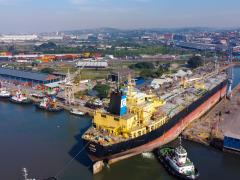
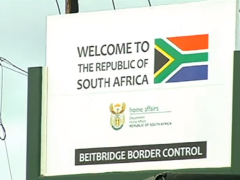
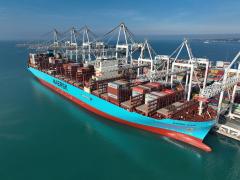
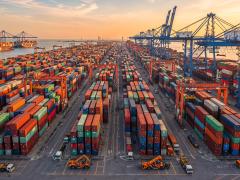
Economic interest may well lie at the heart of the South African government’s “apparent tardiness” in responding to calls to join the anti-Somali piracy drive off the East Africa coastline, says leading maritime lawyer, Gavin Fitzmaurice. It’s a personal, rather speculative view, says Fitzmaurice, a Cape Town-based partner in the law firm, Webber Wentzel Bowens, amid word of an increase in round-the-Cape vessel traffic (rather than Suez Canal transit) due to the threat of piracy. It’s a notion explored by FTW before, ahead of the recent hike in bunker prices, which has led to some operators re-thinking in favour of the shorter Suez option. What is more, there is nothing that would seem to suggest in the immediate or longer term that Cape Town and its sister ports will witness a dramatic rise in vessel traffic due solely to piracy. Mother City harbour master, Captain Ravi Naicker, tells FTW piracy is “not an issue” relative to increased calls at South African ports. There has been a hike in traffic to Cape Town, from a maximum of ten to around 14 at-anchor vessels a month, not all necessarily intent on entering port. The reason is related either to unavailability of berths, carrying out repairs and maintenance or seeking refuge from adverse weather conditions. As recent reports in FTW would indicate, piracy off East Africa and in the Gulf of Aden has subsided somewhat in recent months. US state department foreign service officer and piracy expert David Foran said last week attacks had declined from around 40% to 25% this year, due to a large degree to better “self-protection” measures by the shipping industry. The problem no one has quite been able to solve is how to deal with piracy at an international level. The world requires “a unified global response”, maintains Fitzmaurice. On the gradually southward incursion of pirates into the Mozambique Channel, Seychelles and Comoros Islands, he says: “We should have that concern. Although the government has been tardy in dealing with the problem while it remains thousands of miles from our shore, I have no doubt that if pirate approaches become closer, we will deal with them immediately by being more proactive.” Military sources confirm they await only the green light from government. Fitzmaurice says what is generally not realised is that ransom – US$3 million for releasing the UAE-owned VLCC, Sirius Star – comes at double the price, were one to include the cost of logistics in delivering the loot. Third party negotiators are required because Muslim countries forbid acceptance of ransom money.
Could economic interest be clouding SA’s piracy policy?
Comments | 0
© Now Media. This content is protected by copyright and may not be adapted or republished. If you would like to discuss cooperation opportunities, please contact: editor@freightnews.co.za.