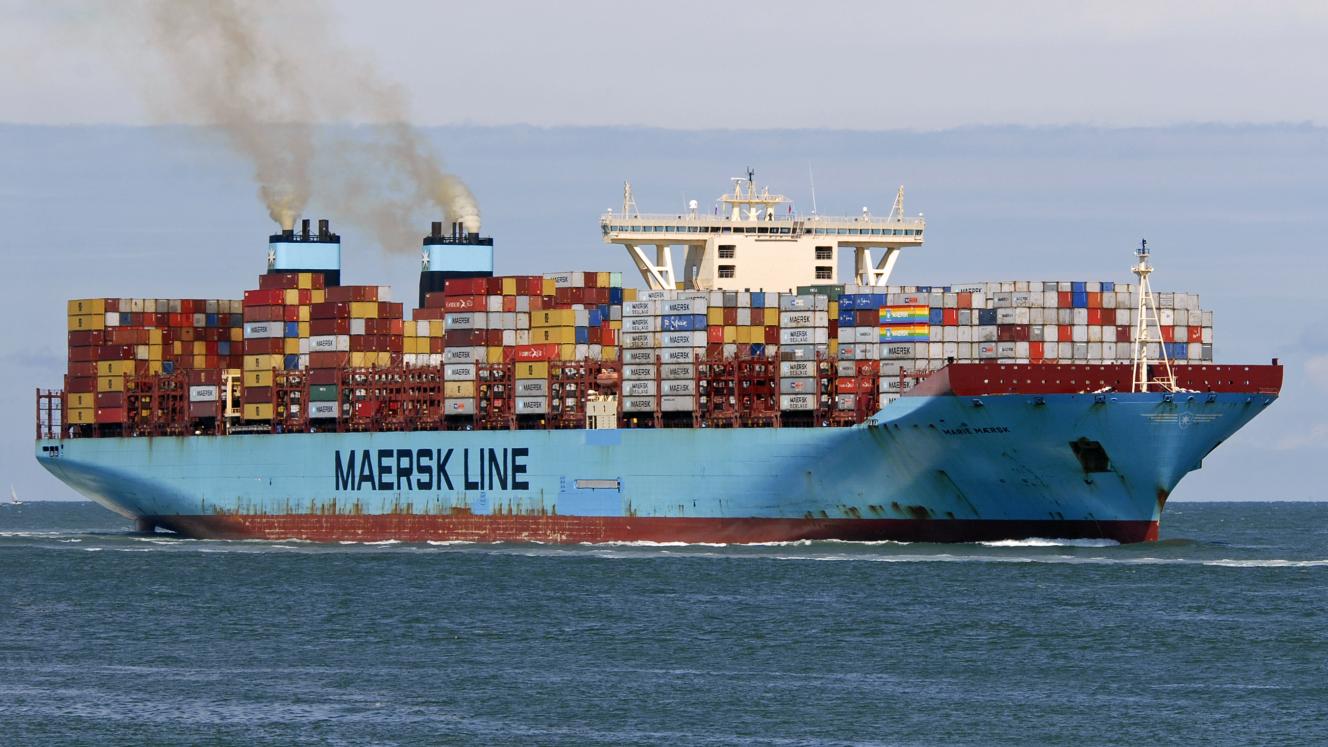
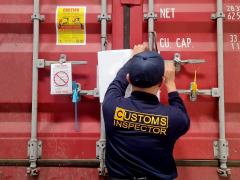
Container volumes have reached record highs as retailers race to benefit from existing import duties before punishing penalties raised by China in its tit-for-tat tariff war with the US are implemented, Lloyd’s List has reported.
The maritime journal quoted American National Retail Federation vice-president John Gold who said that “tariffs on most consumer products have yet to take effect but retailers appear to be getting prepared before they happen”.
He added: “We’re seeing new record levels every month this summer. “Much of that is consumer demand as tax reform and a thriving economy drive retail sales, but part of it seems to be concern over what is to come.”
Meanwhile Global Port Tracker (GPT) also reported that June had yielded “a record monthly import volume of 1.85m TEUs”. It was a figure that was up 1.6% from May and up 7.8% year on year, Lloyd’s List said. There are fears though that current volumes could plummet once the full effect of US President Donald Trump’s protectionist policies are felt.
The first sign of fallout from the tariff blows that the US and China have been trading with one another became palpably clear recently as the US tried to offload 70 000 tonnes of soya beans in the Port of Dalian before the start of a 25% agricultural tariff increase by its biggest Asian trade partner.
The Liberian bulk carrier Peak Pegasus was making its way from Busan in South Korea and was cutting time extremely thin to offload its cargo before the June 6 tariff and it seemed it was just going to make it before being waylaid off the coast of China’s Liaoning Province. What followed has become the stuff of social media drama, followed live on Chinese chat site Weibo, as people started playing a guessing game when the Pegasus would be allowed to pull into port.
That moment finally came about a month later when port authorities gave Pegasus the green light by which time the new tariffs were applicable, and $6bn in import costs were subsequently added to the load worth $20bn.
The US insisted that China absorb the cost, arguing that spoiler tactics had been used to punish the US in retaliation for penalties it had recently raised on Chinese imports to America. China said there was congestion at the port, but Trump’s administration noted with interest state-supported cartoons by the government of Xi Jinping in which American soya beans were lampooned. Jinping’s administration finally acquiesced, deferring the $6bn in penalties to China’s state grain distributor Sinograin.
When word got out that Chinese tax payers would have to foot the bill of tariffs their government had raised against America, posts on Weibo reached fever pitch. But the US didn't get off lightly. Agricultural commodity trading house Louis Dreyfus had to pay R172 000 to charter company JP Morgan Asset Management for every extra day that the Pegasus had drifted in circles around the Yellow Sea.
When the 220m ship finally docked in Dalian, Dreyfus’s month-long load waylay at sea had cost them R5.5m. If ever there was any doubt that a trade war is under way, it’s been effectively dispelled by recent events. There’s blood on the floor.