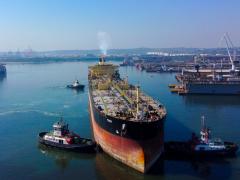
South Africa’s top grape exporters are adamant that unless a consistent container service can be provided once a week during the Cape’s windy season, not only will they again charter conventional reefers to move their fruit but in fact they’ll expand on the service. Fourteen exporters chartered five vessels between November 2013 and January this year to move grapes from Cape Town to markets in Europe – a move that resulted in an estimated $4-million loss in freight and another R4 million in tariffs for Transnet Port Terminals. According to Deon Joubert, general manager of Capespan Fruit Logistics, the decision to charter conventional reefers rather than use container lines was not one that was taken lightly – but due to the port being wind-bound and the delays experienced, very few other options were available. “And it proved to be a very successful decision after three years of struggling to get our fruit to market on time,” he said. “We had a problem and we were not finding any solutions. In the port of Cape Town we had delays that exceeded seven days at a time and up to 19 days at one point. With an early product like grapes that is catastrophic because the product has a very high price to start with – and with each passing week the price comes down significantly. So over the first eight weeks you lose massively if you do not get into the market.” Joubert said delays due to wind as well as other problems with scheduling and stacking dates resulted in the group of exporters deciding to charter vessels. “After much discussion with the port we decided to opt for the reefers and to charter them specifically for the early grape season and to combat the delays we were experiencing.” Joubert said the decision mitigated the massive financial losses that had been experienced and meant exporters were not reliant on the container terminal. Joubert said a total of 24 000 pallets of fruit was moved via the five conventional reefers. “This was not a particularly good year for grapes and we still managed to move that volume. In fact we are planning to charter vessels again this year and are even considering expanding the service and chartering more vessels unless we have a guarantee that our fruit will not be delayed.” Joubert stressed that it was not an anti-TPT or anti-container line move but rather one based on the pure economics of competing on the global stage. “The consequences if you are not in the market at the right time are dire. Once one loses the market share it is very difficult to get back.” INSERT & CAPTION It’s not an anti-TPT or anti-container line move but rather one based on the pure economics of competing on the global stage. – Deon Joubert
Container lines stand to lose grape export business
Comments | 0
© Now Media. This content is protected by copyright and may not be adapted or republished. If you would like to discuss cooperation opportunities, please contact: editor@freightnews.co.za.