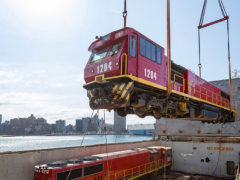
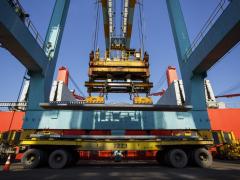
Albert Schuitmaker ... stacking workgroup will critically look at the current practices in the port Ray Smuts AS CAPE Town's container terminal continues its uphill congestion battle which has at times severely disrupted shipping movements, it is pretty much evident that all concerned are grimly determined to succeed in overcoming the current headache. Major players, which include the Association of Shipping Lines (ASL), cargo owners, transporters, forwarders and union representatives, recently joined forces with the Cape Chamber of Commerce and Industry to form a port congestion committee chaired by the Chamber's director Albert Schuitmaker. The goal is to reduce congestion and ultimately improve the situation to the extent that congestion no longer occurs, says MSC's Cape regional director Mike Economou, also chairman of the ASL provincial branch. Shipping delays of as long as 72 hours have been encountered and some vessels have even Ôcut and run' - able to make it into port but not where they should be - at a container berth. FTW understands that the problem has for many months related to inadequate terminal manpower, though it must be acknowledged that SA Port Operations has recently recruited additional workers who are dually equipped to handle straddle carriers and gantry cranes. Manpower - or rather the lack of it - is indeed at the heart of the terminal's woes, the current per crane hour rate being as low as 14. One shipper described it as "ridiculously low" given that the international norm is 25-30 moves an hour on average. Says Economou: "If we could achieve 20 or 22 moves per hour with the present infrastructure, we would be satisfied but I do not say that is where we should stop." The other problem is a shortage of equipment and the inability to stack boxes more than three high. This limitation restricts the capacity of the container terminal. The terminal has leased equipment from SACD in order to stack empty containers even higher than three high in certain areas of the port to alleviate the capacity problem that now exists. Economou says that the co-operation between the stakeholders is beginning to bear fruit because there are signs that the situation is improving. Said one shipper: "I don't think many realise the manifestations of congestion; vessels bypassing Cape Town, loss of confidence in the port, and loss of international markets. It's clear that one needs to keep one's finger on the port pulse otherwise it will run away with you." Says Schuitmaker: "Through the Port Liaison Forum and the port congestion work group we have been able to get the various forces to pull together in the same direction. Bottlenecks have been identified and corrective action introduced. The results have been noticeable. But, in order to look at the medium to long term developments, we have created a stacking workgroup that will critically look at the current practices in the port, and explore radically new ways of ensuring fluidity."
Congestion group makes inroads into clearing CT congestion
Comments | 0
© Now Media. This content is protected by copyright and may not be adapted or republished. If you would like to discuss cooperation opportunities, please contact: editor@freightnews.co.za.