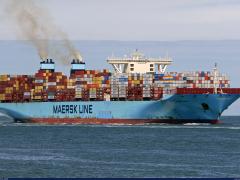
Confusion seemed to be the order of the day as the Chinese implemented their nationwide Value Added Tax (VAT) reform on August 1 that saw the country introducing a 6% VAT on transportation and other services. Initially announced on January 1 in 2012 when the pilot reform was rolled out in Shanghai, the new VAT system that replaces Business Tax across many industries and services, including transport and logisticsrelated industries, is thus expected to have some impact on international shippers importing from or exporting to China. What exactly this impact will be, however, remains uncertain as most experts say reading of the final VAT reform material released in May this year by the Chinese is confusing. While different percentages of VAT will apply to different industries, it is understood that the Chinese will levy 6% VAT on all freight charges which one could simply interpret as a 6% rise in shipping costs for all international shippers – including South Africans importing and exporting from and to China. But, with so much uncertainty, most of the major lines have called for clarity from China. Said a spokesman for Maersk: “There is some uncertainty with regards to the application of the new rules and Maersk Line, along with other carriers, is currently seeking clarification. Given the uncertainty surrounding the application of the VAT, Maersk Line will not be applying any tax-related increases until clear guidelines are received from the relevant authorities in China.” MSC’s Glenn Delve said they understood the tax was being implemented for freight actually paid in China, and as 99% of export freight was paid in South Africa, they did not believe much of an impact would be felt here. Maersk agreed saying this was their understanding of the tax reform as well. “Should the charge be implemented, there will be an impact on charges raised/ collected in China. With regard to charges raised/ collected outside China there should be no foreseeable impact,” said the spokesman. Other carriers such as Safmarine declined to comment saying there were still too many unknowns. According to a statement by the Chinese Ministry of Finance, the new VAT system is aimed at improving the efficiency of the national tax system and will affect several industries such as IT services, design services and all logistics and transport-related services. Before the initiation of the pilot programme, VAT was levied on the sales and importation of tangible goods and on the provision of processing, repaid and replacement services, whereas business tax was levied on the provision of other services and the transfer of intangibles and real property. The Chinese say this resulted in double taxation – and by shifting certain types of services from a business tax system to a VAT system they will introduce efficiencies that will provide major tax savings over the long run to tax payers. INSERT Our understanding is that the tax is being implemented for freight actually paid in China and and we believe it will not have much of an impact here. – Glenn Delve
Confusion reigns over Chinese VAT reform
Comments | 0
© Now Media. This content is protected by copyright and may not be adapted or republished. If you would like to discuss cooperation opportunities, please contact: editor@freightnews.co.za.