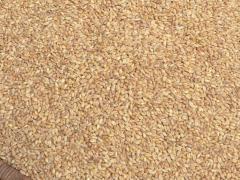
The latest trade agreement between SA and the US has no immediate practical benefit for SA exporters, according to Brian Brink, executive director of the Textile Federation. This was an amendment to the original bi-lateral Trade and Investment Framework Agreement (Tifa) signed up in 1999 between the two countries, and which provided a forum to address trade issues and to help enhance trade and investment relations. From the point of view of the textile and clothing industries, according to Brink, what is due to happen when the current African Growth and Opportunity Act (Agoa) – which gives specific exports from specific sub- Saharan countries duty-free access to the US – expires in 2014 is of much more relevance. This only gives benefits to a limited number of the overall exports from SA – because it is seen as the region’s most developed nation, and with very few exports qualifying for Agoa. But it does play a vital role in stimulating exports (particularly of textiles and clothing) from some of the lesser developed of the neighbouring African states. What is being discussed currently in Washington, Brink told FTW, is a new duty-free, quota-free (DFQF) bill, which will bring into the current Agoa pool some other less-developed countries around the world, like the smaller Asian tigers of Vietnam, Cambodia and Laos. “And if that happens,” said Brink, “some of the smaller African contenders, like Lesotho – where the textile industry is totally dependent on Agoa for survival – will go to the wall.” A possibly more Agoasupportive discussion also took place in Washington a couple of weeks back. That was the 3rd country exemption – which is due to expire in September, and is currently being considered for extension. “The 3rd country exemption,” said Brink, “allows all the lesserdeveloped countries in Africa (excluding SA) to use textiles imported from the likes of Bangladesh, Cambodia and China for clothing manufacture, which still qualifies for Agoa. “Our clothing industry would also like to have it, but there’s not a chance in hell of that ever happening. In the case of the others, though, it will most likely be extended for another three years.” There is also talk of graduating SA completely out of Agoa, where the other lesser-developed states would obviously benefit, according to Brink. “But this doesn’t matter to us,” he said, “because we don’t export textiles under Agoa anyway, because only clothing qualifies, and we also export very little of that.” But, he added, the primary Agoa exports from SA – mineral fuel (coal), machinery, vehicles and parts, iron and steel, and fruits and vegetables – would lose out with the loss of Agoa and its associated general system of preferences (GSP). Total US imports from SA reached US$9.5 billion in 2011, a 15.7% increase from 2010. And last year those entering duty-free under Agoa were US$4.6bn, an increase from US$1.5bn in 2010. “So the likes of left-hand drive cars manufactured in this country for export to the US would be knocked for six if Agoa went,” Brink said. Looking at Tifa, trade specialist, Duncan Bonnett of Whitehouse & Associates, told FTW that these things took a long time to finalise. “It’s very difficult to say anything about Tifa, unless there are concrete proposals,” he added. At the same time, he felt that the DFDQ bill, which would level the playing fields with other new entrants, would have little effect on the US off-take of Agoa imports from Africa. “Some 99% of Agoa is oil and other mineral products,” he said, “which the US would buy from Africa anyway. “There are not a lot of manufactured products, except textiles and clothing, so I don’t see the DFQF being consequential.” CAPTION: SA’s fruit and vegetable exports would lose out with the loss of Agoa and its associated general system of preferences.
Concerns raised over implications of new Agoa agreement
Comments | 0
© Now Media. This content is protected by copyright and may not be adapted or republished. If you would like to discuss cooperation opportunities, please contact: editor@freightnews.co.za.