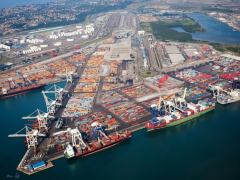
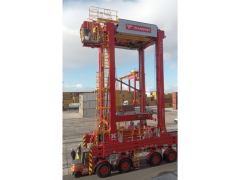
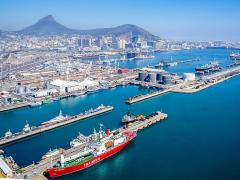
FTW: Infrastructure remains a major concern in Africa – are we seeing improvements? Lerato Mophethe, manager foreign operations and quality assurance of South African Airways Cargo: The lack of improvement in infrastructure remains a major concern. Not much investment has been made to improve the ageing infrastructure. Adrian Friend, managing director of Celtic Freight: In terms of infrastructure at the Zambian borders and routes, specifically the North-South corridor via Botswana, there is improvement. The roads that link Zambia with the South are in a good condition now, and there is a new pontoon at Kazungula crossing the Zambezi. It was commissioned by the Botswana authorities and has taken a huge amount of pressure off the Zambia units and the border is now working smoothly. Costa Vlassis, general manager NileDutch South Africa: We are definitely seeing improvement in Africa which is encouraging interest and further investment. In fact, this is one of the key points for growth and sustainability of the continent as a whole. However, what we are seeing in South Africa is frequent turnover of senior port management positions and important positions still unfilled. FTW: How does infrastructure development impact on your business? Mophethe: The main challenges are the lack of facilities to support cargo operations – and that includes lack of ground handling equipment and X-ray screening equipment for security, the regulatory compliance issues etc. The lack of operational support equipment has forced reliance on manual interventions to support cargo operations. Friend: Road infrastructure within the cities in Zambia is in a poor state of repair, but there is work being done. However, it does slow down business and affects delivery. There are rumours within Lusaka that the desperately needed ring road around Lusaka is on the cards and can be expected shortly. This would greatly alleviate the congestion in this city, allowing the transit traffic to the Copperbelt and Congo to by-pass the city, facilitating movement to and from the various business and industrial areas. Vlassis: We as NileDutch are looking to contribute as far as we possibly can to infrastructure upgrades. There are challenges that we constantly face however, and in an emerging market one must understand that these are normal. Sadly we are also experiencing piracy problems on the east coast, which is having a negative impact on those economies. FTW: Where are the serious infrastructure shortfalls on the continent? Mophethe: Infrastructure in most of Africa’s airports is outdated or non-existent. The main shortfall is the lack of investment to upgrade the existing and outdated warehousing facilities and equipment. The governments own most of the ground handling services, including the airports, and in most cases they are the only allowed service providers in the area. Friend: Road infrastructure remains a major concern with major congestion in cities. Vlassis: One must remember that Africa has started off from a low base and despite that there has been tremendous growth over the past couple of years. We are seeing this in various sectors including rail, ports and storage. A serious concern though is the lack of training programmes for all these sectors. FTW: In your opinion are we addressing these shortfalls fast enough and what do you think the long term impact will be? Mophethe: Shortfalls are currently not addressed in a coherent way. Partnerships with the service providers in ground handling matters would assist us in dealing with the existing challenges. Friend: As data capacities improve steadily this is also making the clearing process with Customs more and more efficient. Certainly the Zambian clearing process itself, which doesn’t provide any form of requirement for a clearing agent to clear cargo more quickly or efficiently, is now the delay in clearing cargo into Zambia. Customs of course is still the ‘goto’ party for any blame relating to delays in clearing. However some agents are taking advantage of the better 3G and satellite internet links and starting to provide a better service to their clients. Vlassis: There is always room for growth. Though this is being addressed, South Africa is still lagging behind due to insufficient or proper management in our port and rail sectors. Many other African countries, including but not limited to Angola, Mozambique and Namibia, are expanding and have employed experienced and professional entities to assist them with their upgrades and new projects. This is starting to prove highly effective. South Africa needs to take heed of this or we will be left picking up the pieces in the coming years.
Companies active in Africa share their views on infrastructure challenges and opportunities
Comments | 0
© Now Media. This content is protected by copyright and may not be adapted or republished. If you would like to discuss cooperation opportunities, please contact: editor@freightnews.co.za.