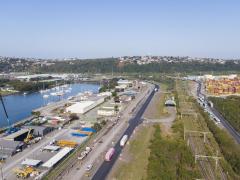
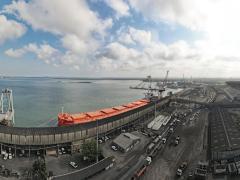
A boom in commodities exports out of West Africa is providing the funding needed to modernise their logistics infrastructure. The 16 West African countries cover some five million square kilometres of some of the most challenging terrain and weather conditions found anywhere in the world. There are also societal challenges to modernising, which are identified in the latest Logistics Performance Index (LPI) published by the World Bank. Change in West Africa “could require trade-offs that are difficult socially and for the poor,” it warns. “Traditional organisations tend to be labour-intensive: WestAfrica’s small truckers’organisation needs twice as many trucks per quantity transported than does commercial trucking in southern Africa – and employs one and a half times as many workers per truck (2.2 to 1.5)”. The ranking of the 16 West African countries in the 2012 LPI report are: Benin (67), Burkina Faso (134), Côte d’Ivoire (83), The Gambia (118), Ghana (108), Guinea (115), Guinea-Bissau (94), Liberia (119), Mauritania (127), Niger (87), Nigeria (121), Senegal (110), and Sierra Leone (150). Cape Verde and Mali are not ranked. South Africa, by comparison, is rated 23rd. A number of the West African states, however, feature in the list of top low-income performers in the 2012 LPI. Benin heads the list, Niger is fourth, and Guinea-Bissau sixth. Benin started investing in its logistics infrastructure in 2 000. Contributing 1.6% to GDP between 2 000 and 2005, Benin’s per capita growth performance was the highest among West African countries during the period. According to a 2011 country report by the World Bank, the rural road network is in relatively good condition, and about 30% of the rural population has access to an all-season road, described as a level above the country’s peers. Air transport connectivity has improved. “Also, important market liberalisation reforms designed to attract private capital to the water and information and communications technology (ICT) sectors have boosted performance. In particular, increased competition in the ICT market has contributed to the rapid expansion of mobile and Internet services, it says. Also in the region, Nigeria, Ghana and Cameroun have formed the West Africa Group, which aims to construct, rehabilitate and maintain the roads of the neighbours, among other socio-economic goals. Ghana has been identified by the World Bank as the region’s leader in transit reform. “Since 2006, the country’s transit reforms have cut the time to process and transport goods crossing the country from five to three days, significantly lowering transport costs. This in a region where change happens slowly. “Members of the Economic Community of West African States (ECOWAS), as well as of the West African Economic and Monetary Union and other regional and bilateral groups, have been discussing reforms to facilitate transit in West Africa since ECOWAS members signed an agreement on inter-state road transit (ISRT) in 1982,” according to economist Luc De Wulf. There have been spin-offs into neighbouring states, he says.
Commodities boom helps fund logistics upgrades
Comments | 0
© Now Media. This content is protected by copyright and may not be adapted or republished. If you would like to discuss cooperation opportunities, please contact: editor@freightnews.co.za.