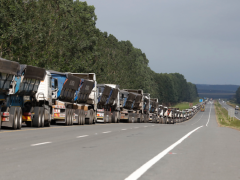
WHILE intra-Africa trade has made great strides in simplifying road bonds through the adoption of distinctive bond guarantees by the various regional trading blocs, a single guarantee is needed for the major corridors in Africa. Traditionally, all cross-border traffic is subjected to a system of putting up ‘Road Bonds’ in each country traversed. “Goods are moving ‘in bond’ (i.e. the duty and taxes have not been paid) and in the event the goods are diverted for ‘home’ consumption in the country being transited, the bond/guarantee can be relied on to make good any loss to the fiscus,” explains Rina Belcher of insurance major, Lombard Insurance. “Reliance is normally placed on the guarantees provided by clearing agents in each country,” says Belcher. Goods often travel on three or four different bonds/guarantees – depending on the number of countries that must be transited – before reaching their final destination. This simply drives up the costs of transporting in Africa, and has recently prompted various trading blocs to streamline their internal trade procedures. Comesa (the Common Market for Eastern and Southern Africa) has implemented the Regional Customs Transit Guarantee/Bond Scheme (RCTG) while SADC (Southern African Development Community) has been working on the Regional Customs Transit Bond Chain Guarantee. While the aims of each system are essentially the same, the process and procedures differ greatly. This presents problems on the busy corridors such as the North/South route (DRC/RSA). “The northern states will have the Comesa scheme while the southern ones adopt the SADC scheme. Add to this countries like Zambia that belongs to both economic blocs and the problems are self-evident,” says Belcher. “The Comesa scheme is cumbersome and the guarantee requirements are considered too large,” adds Belcher. Though the SADC system is more realistic concerning the guarantee values, the expectations of the bond holder are arduous at best. Belcher feels that “taking the best from both and adding this to already common practices between guarantors could see a simple streamlined system that would benefit all concerned.” The cost-saving element is difficult to quantify in a combined system, but Belcher believes that cost savings will largely depend on the amount of activity normally taking place and the risk attached to the type of commodity being moved. While savings could be as high as 75%, this represents only part of the benefit – the most significant factor must be the faster turn-around times for transport owners.
Combined road bond system could bring massive savings
Comments | 0
© Now Media. This content is protected by copyright and may not be adapted or republished. If you would like to discuss cooperation opportunities, please contact: editor@freightnews.co.za.