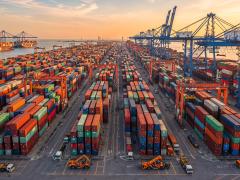
Climate change is already placing more than $5.3 billion of African trade at risk each year, and there are warnings that without urgent adaptation measures, annual climate-related damages and revenue losses could soar to $680bn by 2050 – or as much as seven times higher when future trade growth is factored in. That is according to the inaugural edition of the Global Center on Adaptation (GCA) Climate Risks to African Ports: A Trade Corridor Approach for Resilience and Adaptation. “Africa’s ports are the economic lifeblood of the continent, handling more than 88% of its imports and 94% of its exports by volume,” writes Professor Patrick V Verkooijen, GCA president and chief executive officer, in the foreword. Africa’s corridors depend on port gateways for imports and exports outside of the continent. “This report makes clear that adaptation is not a cost; it is a strategic investment. By building climate-resilient infrastructure today, we are laying the foundation for a future in which African trade thrives, communities prosper and economies stand strong against any storm,” says Verkooijen. The report singles out Durban as an example of a port where disruptions will have a wider impact due to the trade corridors with neighbouring economies like Mozambique and Zambia. “These vulnerabilities will intensify as African economies continue to integrate into global supply chains, underscoring the need for investment in resilient infrastructure to protect against transportation disruptions,” the report states. It highlights a growing threat of extreme heat to port workers and infrastructure, with 43 of the approximately 100 African ports expected to experience more than 30 dangerously hot days per year by mid-century – up from six today. Recommended interventions include shaded workspaces, cooling facilities, adjusted shift schedules and selective automation, measures that protect not only worker wellbeing, but operational efficiency and revenue streams. The report also stresses the importance of redundancy across port-hinterland corridors, noting that Africa’s heavy reliance on a small number of maritime gateways creates chokepoints that could jeopardise food security and trade resilience in the event of climate-induced shutdowns. Beyond physical upgrades, the report emphasises the need for a systemic approach to adaptation that includes accurate local climate data, economic impact analysis of port disruptions, and improved governance. It calls for embedding climate adaptation into every stage of port planning and investment, from design and maintenance to financial modelling and public- private partnerships. Despite the potential returns, the report notes that less than 3% of private climate finance in Africa is currently directed towards adaptation – highlighting a critical financing gap that must be closed through PPP leverage, concessional capital and more effective risk- sharing mechanisms. ER
Climate change putting gateways at risk
Comments | 0
© Now Media. This content is protected by copyright and may not be adapted or republished. If you would like to discuss cooperation opportunities, please contact: editor@freightnews.co.za.