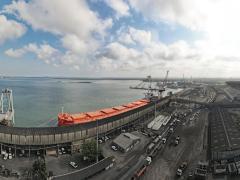
A new plan for an integrated transport management system (ITMS) will provide the SA citrus export industry with what Citrus Growers’ Association (CGA) logistics development manager, Mitchell Brooke, has described as “the most progressive development in the citrus supply chain past the farm gate since deregulation”. He has just presented the idea of the ITMS to the Citrus Logistics Forum (CLF) members, revealing that ITMS would involve a central co-ordinating and communication function (run for all cold stores) and a designated area for the collective staging of trucks. At this meeting, cold stores management indicated that, if the packing problems were sorted out, then they would be very happy to see the ITMS system introduced and help pay for it. Brooke also received a positive response to whether the ITMS idea could be implemented from CLF members. “Our action plan is that, over the next few weeks, I will engage with cold stores (who hold the key to the success of the ITMS) to work out an implementation plan.” The logic behind the scheme is that citrus exports through the Port of Durban have shown growth of 50% in eight years. “Rail is defunct,” Brooke told FTW. “Therefore 100% of citrus deliveries in Durban are expected on road trucks. That is some 850 000 pallets on 35 000 trucks expected for 2012 and beyond. “But trucking citrus into Durban has developed a negative stigma in the transport industry – with damages and delays. And Aarto rules include a demerit system that will affect truckers harshly for road offences like overloading and front gate parking because of the congestion.” He considers this a long-term issue, and one that requires proper management going forward – and this is where ITMS comes in. “Industry needs to act on this and manage it collectively,” Brooke said. “If not, it will have ramifications for everybody in the supply chain.” He pointed to specific factors that cause delays to trucks entering Durban. One is that cold stores are located in industrial zones, like the Point, Maydon Wharf, Congella and Isipingo, a zoning affected by greater industry at large. Also, the arrival of citrus trucks is generally far greater than the throughput time to offload trucks because of bottlenecks, with container trucks fighting with farm trucks as they look for a spot to offload/load citrus at the depots. Added to that is a low percentage of inbound trucks advising cold stores with bookings, and no staging and/or sequencing of farm truck and container truck arrivals, making it literally a free-for-all.
Citrus industry moots internet-based management portal
Comments | 0
© Now Media. This content is protected by copyright and may not be adapted or republished. If you would like to discuss cooperation opportunities, please contact: editor@freightnews.co.za.