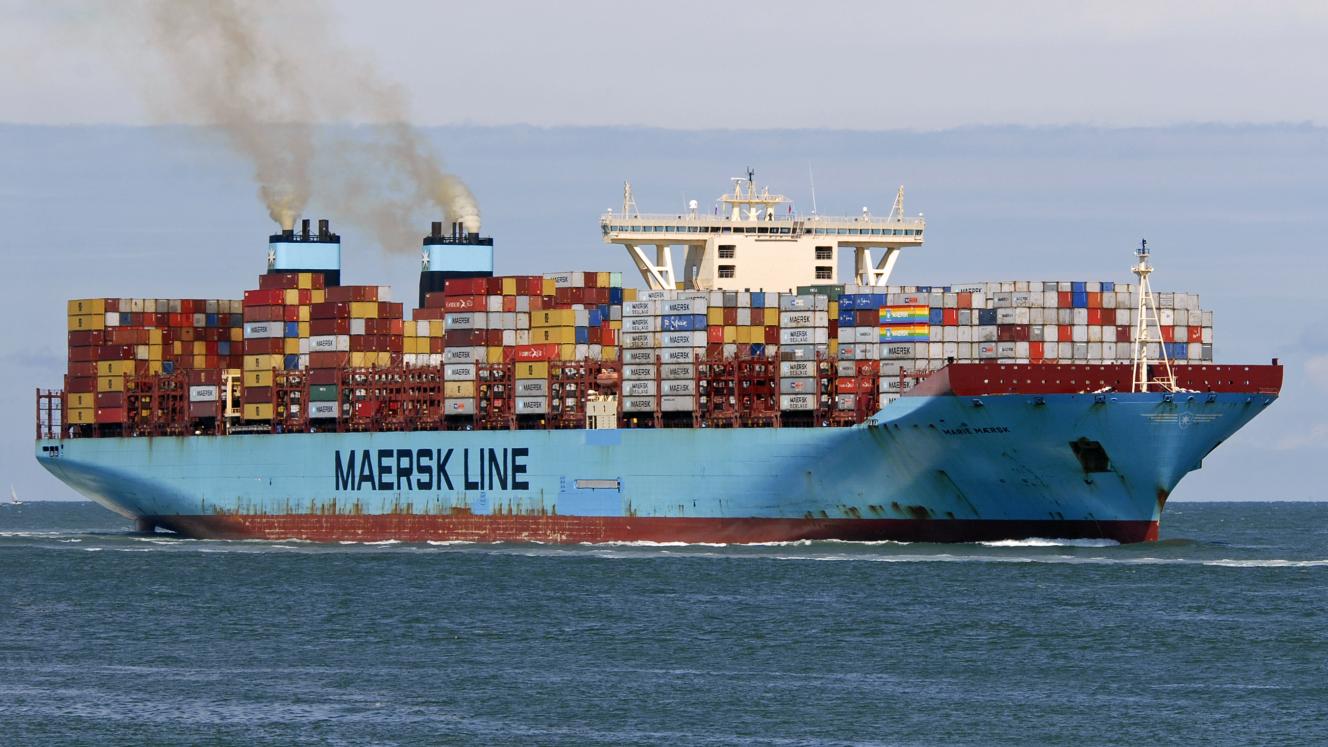
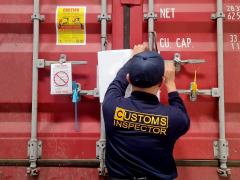
As the unofficial start of spring was declared on September 1, so minds in the freight and trade industries turned to prospects for the pre-Christmas rush of import goods to fill the shelves for the festive season. “Pre-Christmas rush – what’s that?” a shipping executive on the Far East trade asked FTW. This year’s peak season, he noted, is a bit flat. “Flatter than last year. “The orders are not as big as they usually are – as retailers guard their stock levels. I’ve just been reading that retail sales are down 37%. I ask you!” Not that his ships are not running to the brim, he told FTW. “But, considering we’ve cut capacity by about twothirds,” he added, “that’s not surprising.” David Williams, MD of Maersk Line, is more positive. Although he admitted that services had been reduced, he was quite pleased about his ships running full – and even more so that rates were showing an upturn. “We’ve noted a good demand for capacity from the Far East,” he said. He also pointed to a definite positive trend – with the August port stats showing that imports were up to 87 000 TEUs, compared to just 80 000 the month before. “We’re already fully committed through to the end of October on the Far East trade,” Williams added. Roger Phillip of Deutsche Afrika Linien (DAL) didn’t feel part of the pre-Christmas brigade. “The peak season is more the Far East, so we’re not really involved,” he said. The products that come south on the North-West Continent (NWC)-SA trade on which DAL focuses, according to Phillip, are not what he’d term Christmas-type goods. “But we’re currently running full southbound,” he said, “although both the core and intermediate services have been reduced.” Phillip however expected an upturn in volumes – although not as big a figure as for the major, global lines on the same service. Sam Moffitt of Hamburg Süd also suggested that his line was not really one of those with pre- Christmas expectations – only serving the Far East trade on an agency basis. “However, space has certainly been tight,” he said. “But I don’t know if that’s a function of an upturn in volumes, or from the fair amount of rationalisation in the Far East trade.” Alex de Bruyn, SA trades executive for Safmarine, and responsible for all trades ex SA, noted that the seasonal import volumes (cargo landed in SA) for 2009 were down approximately 15% (across all trades) compared to 2008. This according to Transnet National Ports Authority (TNPA) comparative statistics provided for the year-to-date to August. “But,” he told FTW, “the Safari (SA-Far East) service volumes did pick up as expected, although the increased seasonal flows were lower than those experienced in 2007 and 2008. “Safmarine provided two extra loaders (on a round-trip basis) as part of our Safari 1 service at the end of August and early September to serve the additional/seasonal demand for capacity. A third extra loader is likely to be provided before the end of September – subject to demand.” He then expected seasonal import volume trends for September and October 2009 to reflect a similar pattern to previous years – that is, taper down by October, effectively ending the ‘peak’ season. De Bruyn noted no significant seasonal import peak for the USA and Europe trades. “Not only are these more mature markets,” he added, “but a lot of manufacturing has moved to the East, which is why seasonal flows ex Asia are more pronounced.”
Christmas rush has arrived – for some
Comments | 0
© Now Media. This content is protected by copyright and may not be adapted or republished. If you would like to discuss cooperation opportunities, please contact: editor@freightnews.co.za.