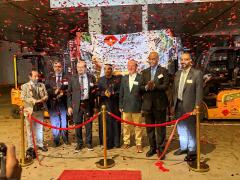
Rail is set to play a significantly larger role in southern Africa’s freight network as investment in railway infrastructure gathers momentum across the region, with projects such as TAZARA, the Lobito Corridor and the proposed Trans-Kalahari Railway expected to shift increasing volumes of cargo from road to rail. Speaking during a road and rail panel discussion at the Zambia Land-Linked Conference, industry stakeholders said the rehabilitation and concessioning of the Tanzania- Zambia Railway Authority (TAZARA) railway alone was expected to dramatically improve freight efficiency, reducing transit times from as much as 12 days to as little as three while increasing annual cargo volumes more than twentyfold. According to Bruno Ching’andu, managing director of TAZARA, the concession programme will initially focus on repairing and upgrading infrastructure before introducing new locomotives and wagons. The upgrades are expected to increase train speeds from the current 30 km/h to between 70 km/h and 80 km/h. “The attractiveness of the railway improves immediately,” he said. “The cost of operations and pricing will also improve, and we expect this to attract more traffic from road to rail.” China Civil Engineering Construction Corporation announced plans to invest about $1.4 billion to rehabilitate the 1 860 km railway between Dar es Salaam in Tanzania and Kapiri Mposhi in Zambia under a 30-year concession in April last year. Ching’andu told delegates the concession was the game- changer for TAZARA as it addressed capital financing, possibly the biggest challenge the project had faced. Annual volumes are projected to increase from approximately 100 000 tonnes currently to around 2.4 million tonnes by the fourth year of the concession. Cuthbert Malindi, managing director of Zambia Railways, said investment in railway projects was on the rise across the region and expectations were high that the share of freight moved by rail would increase within the next two to three years. In Botswana, President Duma Boko has issued a deadline for work to begin on the proposed $10bn Trans-Kalahari Railway project, which has also been more than a decade in the making. He has called for firm movement on the project by no later than December this year. Another important development has been the acceleration of the Lobito Corridor project, with the Lobito Atlantic Railway now providing rail services from the Port of Lobito in Angola to the Democratic Republic of the Congo (DRC) Copperbelt. Funding has also been secured for a new 515 km Zambian rail link to connect with the Lobito line, as well as a 315 km extension into the DRC. Ching’andu said rail remained critical to the continent’s long- term logistics future, particularly for moving bulk commodities over long distances. Malindi said one of the biggest challenges facing rail operators was that rail infrastructure had been neglected for years while freight volumes had increasingly shifted to road. Unlike roads, which are generally funded by governments, rail operators were often expected to fund infrastructure upgrades and rolling stock investments themselves. He argued that the solution extended beyond simply rehabilitating rail lines or acquiring new locomotives and wagons. “We need to look at the entire logistics chain,” he said. “It is not just about moving cargo from A to B. We need to ask where the loading and offloading points are, where the transhipment hubs are and how the different modes work together.” LV
Chinese investment a game-changer for TAZARA
Comments | 0
© Now Media. This content is protected by copyright and may not be adapted or republished. If you would like to discuss cooperation opportunities, please contact: editor@freightnews.co.za.