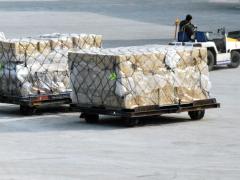
China is expected to maintain its status as the biggest supplier of South African imports in 2026, with strong demand for machinery and electronics expected to continue at around 21.5% of the total, or R413 billion, according to TradeInt. Official statistics reveal that India was the second-largest supplier at 7.4% (R143bn), followed by Germany (7.2% or R138bn), United States (7% and R134bn) and Saudi Arabia (3% or R64bn). SA’s main imports are: machinery (21.3% of total imports), mineral products (16.9%), chemicals (12.6%) and vehicles and aircraft (7.7%). In 2025, SA had a cumulative trade deficit (value of imports over exports) of R22bn in machinery and appliances, R5bn in chemical products, R2.7bn in textiles and clothing and plastics and rubber, R2bn in precision products, R1.2bn in footwear, R1.1bn in miscellaneous manufactured articles and R1bn in fats and oils. Chinese imports included machinery, electronics, textiles and manufactured goods. India exported refined petroleum, pharmaceuticals and vehicles. Germany’s exports to SA were led by high- value machinery, vehicles and automotive parts. The US supplied advanced technology, industrial equipment and chemical products. Saudi Arabia was a major supplier of crude oil and refined petroleum. Imports under the African Continental Free Trade Area (AfCFTA) preferences have grown slowly since trading began on January 31, 2024, when South Africa became the first SACU member to ship under the agreement. According to the Department of Trade, Industry and Competition, SA imports are primarily mineral products like crude petroleum oils, alongside precious metals, textiles and chemicals. Between January 2024 and October 2025, imports under preferential AfCFTA terms reached R1.2bn, mainly from Egypt, Tunisia, Morocco, Kenya, Rwanda, Cameroon, Ghana and Burundi. In contrast, AfCFTA-facilitated exports were worth around R2bn during the same period. This is a small portion of the total African imports (including Botswana, Lesotho, Namibia and Eswatini) of R179bn in 2025, according to Sars figures. The largest category was mineral products at R62bn, followed by precious metals (R27bn), textiles (R16bn), chemicals (R14bn) and prepared foodstuffs (R13bn). Eswatini was the biggest supplier of prepared foodstuffs (R9bn). Exports to South Africa include jams, jellies, marmalades, fruit/nut purees, pastes, preserved fruits, nuts and fruit juices. Nigeria was the main mineral products supplier (R28bn), followed by Angola (R14bn) and Mozambique (R17bn). Namibia was the biggest supplier of precious metals (R22bn), followed by Tanzania (R2bn) and Botswana (R1bn). ER
China dominates, Eswatini sweetens SA
Comments | 0
© Now Media. This content is protected by copyright and may not be adapted or republished. If you would like to discuss cooperation opportunities, please contact: editor@freightnews.co.za.