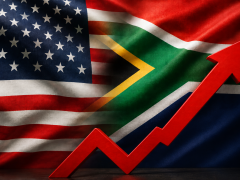
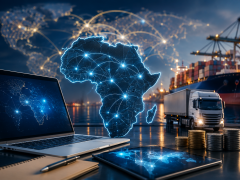
Uncertainty and fast- shifting policy environments are currently making investment decisions more crucial than ever before in Africa. According to RMB’s latest ‘Where to Invest in Africa’ report, whether one is allocating capital, drafting legislation or simply steering an organisation through day-to-day operations, the usual markers of stability no longer hold. The report highlights that one of the biggest shifts since 2024 affecting the continent is the change in global aid. “The United States alone this year terminated more than 6 000 of its global programmes under its United States Agency for International Development (USAID),” reads the report. According to the Organisation for Economic Cooperation and Development, countries such as France, Germany and the UK all cut their official development assistance by as much as 9% in 2024, with the outlook one of extreme uncertainty. This has led to Africa seeing a substantial decline in international aid, a development expected to cause some hardship. Additional factors impacting the continent include the outcomes of multiple national elections, with nearly one-third of the more than 60 countries that went to the polls last year being in Africa. These elections have brought notable change. In South Africa, the ANC was forced into a government of national unity, while in Ghana the opposition took power. More impactful, however, has been the behaviour of commodity prices. “Central to Africa’s economic performance, commodity prices were broadly flat through 2024, as measured by the global commodity index,” states the report. Although there have been significant ranking movements, Seychelles and Mauritius remain at the top of the ‘Where to Invest in Africa’ table. “This is not to suggest they are for all purposes the best places to invest; rather, their scores reflect small but appealing markets. These destinations may appeal to financial services firms, perhaps. However, companies that need to move volumes of disposable infant diapers, for instance, will not find an attractive market in the Seychelles.” Egypt takes third place – a country emphasising digitisation as part of its growth strategy – followed by South Africa, which the report describes as “a country that is economically stuck”. Morocco, host of the 2030 FIFA World Cup alongside Spain and Portugal, takes fifth spot. At the other end of the scale, Zimbabwe remains at the bottom of the rankings due to its challenging business and investment environment. Countries showing major shifts on the index include Nigeria, which dropped from ninth to 18th place, largely due to policy decisions, and Zambia, which has improved its ranking by five places thanks to ongoing efforts to strengthen its financial position. Lv
Changes in global aid the biggest shift
Comments | 0
© Now Media. This content is protected by copyright and may not be adapted or republished. If you would like to discuss cooperation opportunities, please contact: editor@freightnews.co.za.