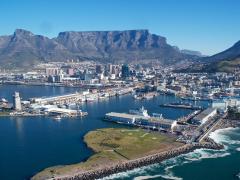
Water usage by the agricultural sector will be curbed significantly in coming months as the Western Cape moves into overdrive to avoid taps running dry. Briefing the media in Cape Town recently, the city’s director for water and sanitation, Peter Flower, said water releases from dams to the agricultural sector would now be curtailed. “By January 1 agriculture had already used 40 million kl out of its total allocation of 60 million kl. It is imperative that agriculture use is restricted to its allocated amount,” he said. “This requires urgent attention on the part of the national department of water and sanitation to enforce restrictions by managing, reducing and cutting releases from the dams.” Assuming another low rainfall year occurred and restrictions were not adhered to, Cape Town would run out of water, said Flower. A complex system of dams supplies most of the water to the agricultural and urban sectors in the region. About a third of the water is used by agriculture. Flower said current systems were not sustainable. “Planning to diversify from the dam system started years back and alternatives such as using ground water, water re-use and desalination plants have all been on the table. Several feasibility studies have been conducted.” Flower said the water usage plans were conducted on a one in 50 year level of assurance. “This means that during droughts with a severity of 1:50 years or more, restrictions need to be imposed to reduce demand. The current drought is much more severe than a 1 in 50 drought event.” The next augmentation scheme for Cape Town (augmentation of the Voelvly Dam) was only on the cards for 2023 but was now being accelerated by the national water department due to the unprecedented multi-year drought. It would only go on line around 2021 though. He said if the agricultural and urban sectors all adhered to restrictions a catastrophe could be avoided. “We have anticipated that we can avoid switching off the taps by capping agricultural demand and putting extensive pressure on residents not to use more than 50 litres of water per day.” But, said Flower, it was essential to understand that neither the city nor the provincial and national authorities had the means to build their way out of a drought. “We can build as much infrastructure as possible to augment the water supply, but it will never be enough on its own. We have to have the dams, and rainfall will always be our main supply of water.”
Cape agri-sector faces further rationing
Comments | 0
© Now Media. This content is protected by copyright and may not be adapted or republished. If you would like to discuss cooperation opportunities, please contact: editor@freightnews.co.za.