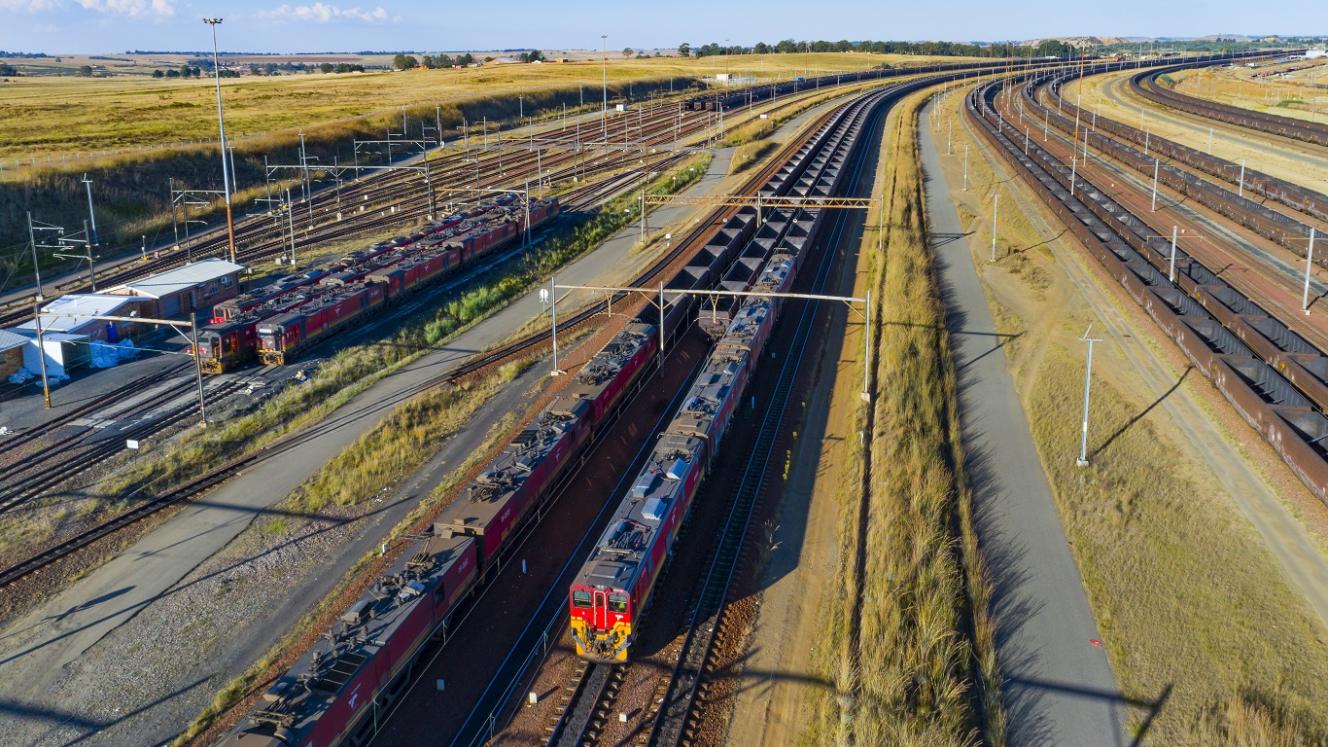
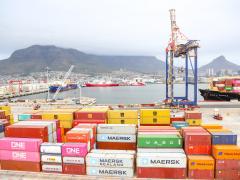
While the effect of the upgrading of the Port of Durban has not been the train smash that was feared, according to representatives of transport bodies, there could be a shunt waiting just round the corner. Ship handling and road transport movement in and out of the container terminals is relatively smooth-flowing, but container overflow is already causing worrisome congestion at the multipurpose quays, especially the Point. Kevin Martin, chairman of the Durban Harbour Carriers’ Association (DHCA), told FTW that the movement of container vehicles was not being excessively hindered by the loss of quay space at container terminals 1 and 2, as deepening and strengthening takes place at the quays on a sequential basis. “But this is not because of any smart planning by Transnet Port Terminals (TPT),” he said. “Rather, it’s because the cargo volumes are down. And, under the circumstances, we’re coping reasonably well.” But, Martin warned, this could soon change for the worst. “This month the citrus season starts, with its substantial bump-up of container numbers,” he said. “So this might be a different kettle of fish.” Container ship movement is also giving no cause for concern at the moment, “especially with the helicopter pilotage service having restarted at the beginning of this month,” according to Peter Besnard, CEO of the SA Association of Ships Operators and Agents (Saasoa). “Ship movement was a point that was raised at a recent Saasoa meeting,” he told FTW, “and there were no complaints raised. I have also received no complaints at the office in recent times.” Besnard also noted that the upgrading works at Berths 108 and 109 were almost finished, and that Berths 1 and 13 at Maydon Wharf (the largest break-bulk and drybulk handling precinct in the Transnet ports system) were due to be started in May. “In saying that, there have been no complaints from the breakbulk guys. They said they’ve been coping up to now.” However, breakbulk operators have told FTW that they always have to be concerned when a berth goes down, especially as the multipurpose terminal (MPT) operates principally between Berth 8 and 13. But the wharf at the Point is a different story, according to Carl Webb, abnormal transport specialist, and SA Association of Freight Forwarders (Saaff) representative at the multipurpose wharves in the harbour. “Accommodating the extra container overflow at the Point has resulted in serious congestion for us,” he told FTW. “This has had an adverse effect on loading our abnormal vehicles with the heavy equipment that is imported through the multi-purpose terminal.” It also originally led to a piece of rather weird arithmetic miscalculation by TPT, Webb added. It began with a TPT-estimated 400 000 TEUs which would have to be relocated during the Durban upgrade programme. Some of these would go to other ports and some to Maydon Wharf – the other multi-purpose terminal in the harbour. But, said TPT, 219 000 of these boxes were allocated to the Point. “But when I asked them (TPT) how many were already being handled at Point by the multi-purpose vessels (MPVs) already using it, they told me 113 000 TEUs. As the capacity at the Point is 219 000 TEUs, that only left 116 000 TEU space for that 219 000 extra they had allocated.” And that, Webb added, was where the congestion started. He agreed that things were quiet on the container front at the moment. “But,” he said, “the upgrade is a six-year programme. And what’s going to happen when things get globally busier, and TPT’s estimate of 5% annual growth at the Port of Durban comes into swing? “When we get these increased volumes going through a limited-access terminal, then we’ll have fun and games.” INSERT This month the citrus season starts, with its substantial bumpup of container numbers, so this may be a different kettle of fish. – Kevin Martin CAPTION Photo: Shannon Van Zyl
Can Durban cope with a business upturn?
Comments | 0
© Now Media. This content is protected by copyright and may not be adapted or republished. If you would like to discuss cooperation opportunities, please contact: editor@freightnews.co.za.