Rules of origin have been identified as a critical point of resolution ahead of the ratification by South Africa of the Tripartite Free Trade Agreement (TFTA).
The Agricultural Business Chamber (Agbiz) has joined the call by Deputy Minister of International Relations and Cooperation, Luwellyn Landers, for producers and labour organisations to “become involved in the conversation” around the Rules of Origin.
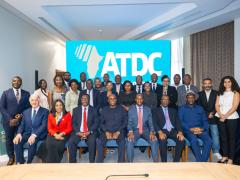
The TFTA is an initiative between three regional economic communities in Eastern and southern Africa – the Common Market for Eastern and Southern Africa (Comesa), the East African Community (EAC) and the Southern African Development Community (SADC).
The heads of state and government members from the respective regional communities officially launched the TFTA at the Third Tripartite Summit in Sharm El Sheikh, Egypt in June 2015. Once ratified by all 26 member states, the TFTA is expected to be implemented this year.
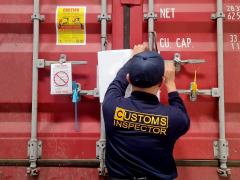
The agreement addresses, amongst others, the elimination of non-tariff barriers, customs cooperation and trade facilitation, and the elimination of duties on goods to improve trade within the larger trade bloc.
The Rules of Origin are important in that they help to determine whether a product ‘originates’ from a country that is a member of the Free Trade Area, so that the product qualifies to receive preferential (or zero) import tariffs within the trade bloc.
Agbiz said that this was particularly important for agricultural producers who beneficiated a raw product.
“The basis for the preferential rules imply that if a product is wholly obtained or produced completely within South Africa, the product shall be deemed as having originated from South Africa and will qualify for lower tariffs,” a spokesperson explained.
He added however that for a product that had been partly produced in another country outside of the TFTA, and then further processed and value added in South Africa, the product would be determined to have originated in the country where the last substantial transformation or processing had taken place.
For example, for some products, the “rule of origin” stipulates that South African companies can source raw materials from elsewhere in the world, but the value added to the product should be at least 60% of the “ex-works” or “ex-factory” price.
According to the spokesperson, a typical scenario is the Rules of Origin negotiation for a product such as “sugars” (ie, products such as lactose, glucose, fructose, sugar syrups etc.). Currently, the Rules of Origin in the manufacturing of these materials differ between SADC, Comesa, and the EAC.
Whereas Comesa and SADC accept that raw materials for the manufacture of this product can be sourced from and therefore wholly produced by any of the 26 countries that are participating in the TFTA, the EAC stipulates that the weight of the raw materials should not exceed 30% of the final product.
“Rules of Origin can determine whether it is more profitable for an agribusiness to establish a processing plant in a particular country, rather than exporting from South Africa,” said the Agbiz spokesperson, adding that these could also guide a producer’s sourcing decisions and manufacturing processes.
“This is because the Rules of Origin can potentially exclude an exported product from a particular market in the same way it provides preferential market access for your product in a particular country. As such, Rules of Origin can serve as a guide to investment decisions.”
He said it was therefore important for producers to understand the Rules of Origin in the TFTA context and to strategically align their businesses accordingly, in order to tap into particular lucrative country markets that might be of interest.
Landers said this could also affect local manufacturing jobs as producers who benefited from the Rules of Origin would have a price advantage over products due to the preferential tariffs.
“What this means is that partner countries would need to ensure that localisation is prioritised and that they guard against products from countries outside the African continent from being traded under the agreement,” he said.
INSERT
Rules of Origin can determine whether it is more profitable for an agribusiness to establish a processing plant in a particular country. – Agbiz