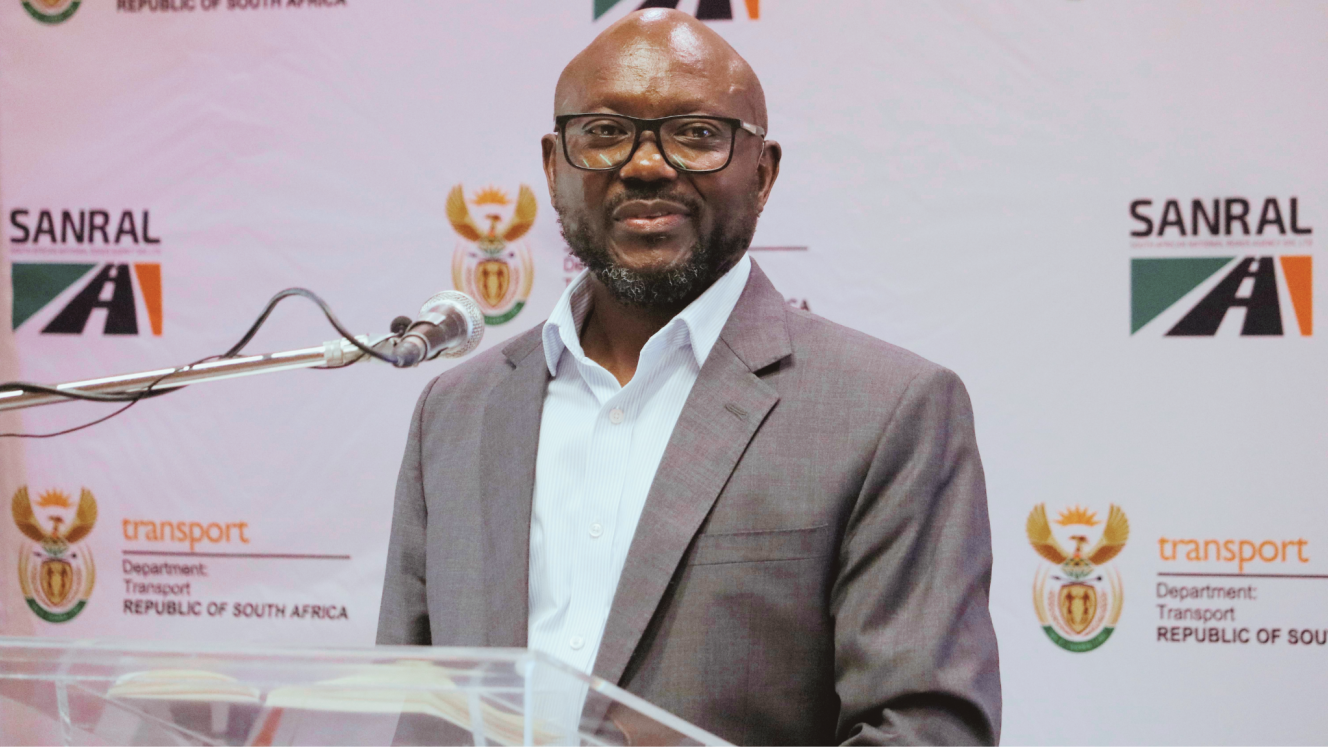
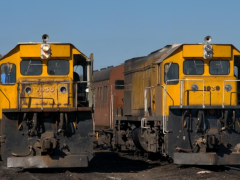
Transport Minister Sibusiso Ndebele is a big fan of the railways. Since stepping into office he has spent much time researching the country’s inadequate rail system. In his recent budget speech in Parliament the minister did not beat around the bush – he made it clear that the exorbitant cost of transport in the country was no longer viable and more cargo needed to move from road to rail, quickly. And the industry agrees – rail must come to the party if South Africa wants to remain globally competitive. There is no doubt that the country requires more cost-effective transport to keep its economy going compared to the rest of the world, considering the main economic hub is some 600km from its nearest ports, says Dr Jan Havenga of the University of Stellenbosch. With the cost of logistics now in the region of around R339 billion per annum, experts agree the debate is over and it is no longer a question of road or rail, but rather how soon the country can harness both to ensure global competitiveness and success. But, says Gavin Kelly, rail must get its act together if there is to be any move forward. “Rail will not get its fair share of cargo until it addresses issues around its unreliability and inability to deliver to the customer.” He says there is no denying the need for rail in the country, but reliance on trucks will continue for years to come unless major steps are taken to address the infrastructure backlog of the rail network as well as its inability to function professionally. “The reality is without trucks South Africa stops. That does not mean though that we don’t need an efficient rail network.” Abrie de Swardt agrees saying an efficient rail network is a critical enabler of a country’s competitiveness. “In a global economy led by marketrun supply and demand, rail today needs to be orientated towards supply chains to meet the changing needs of its customer base. No economy in the world can remain globally competitive and sustain growth without a credible and sound rail transport system.” As transport remains a dominant factor in the day-to-day activities of the majority of South African companies with regard to mobility, it is essential to have access to an effective rail system. According to John Thompson one just cannot accept that rail is a dysfunctional investment. “Rail makes sense not only from a cost perspective but an ecological perspective.” Why not just build a freight highway since rail is struggling to find its feet? An improved railway infrastructure and system is vital to meet the growing demand for efficient transport links to ports and between neighbouring countries in southern Africa. Kelly says admitting the rail system is dysfunctional is the first step in addressing the problem. “Why build a freight highway – we already have one. It is called the N3. There is no doubt in my mind that we need both road and rail in South Africa. Therefore we need to fix the rail infrastructure, not accept its dysfunctionality as a fait accompli,” he says. “In the same way we should be maintaining our secondary road network.” According to De Swardt the main challenge facing South Africa is the modernising of its railway system in a manner that promotes growth and development given that South Africa’s ability to efficiently move freight is vital to a modern, thriving economy. “Our transport services and infrastructure are however expected to be focused, planned and budgeted for and it’s therefore imperative that the plan on paper come to fruition quickly and effectively.” But if the annual 6th State of Logistics Survey is to be taken into account then Transnet’s multibillionrand investment plan is already inadequate in creating rail capacity, making private investment crucial. According to Thompson many of the issues around rail’s inability to function relate to its marginalisation since the mid 1980s. “In the same vein the lack of investment in road maintenance is now coming home to roost. Road freight when compared with rail is much more environmentally unfriendly. We are entering the age of taxing emissions and the country is going to have to meet its targets.” But does rail still have a role to play? Imagine moving 100 million tonnes of export ore and coal onto road for transport to the ports, says Thompson. “There is no doubt that rail has a role to play, but the real question is rather what role should rail be expected to play in the various transport segments.” In Kelly’s opinion rail is a musthave in the country when used in the markets for which it is best suited. “For any long distance single commodity point to point transportation rail makes sense. Stopping and starting has always been a problem for rail, but if you take this facet out of the equation and build the lines properly to service specific commodities, then rail has a big role to play.” But rail traffic has stayed the same over the past 15 years, while road transport has more than doubled in the same period. “It is not sustainable,” says De Swardt. “As companies we need to have a common objective to alleviate the pressure on the road system and to bring back to rail the commodities and containers that are suitable for rail transport – rail centric products such as coal, iron ore and manganese to name but three.” As large parts of the rail network system remain in serious decline, while the backlog in road maintenance causes much concern, South Africa – be it government or the private sector – is going to have to find solutions that ensure the continued movement of freight, optimising the country’s endto- end supply chain. “It is about integrating the way that South Africa’s rail, road, inland terminals and ports work in an effort to complement each other so as to compete as a whole against other global supply chains,” says De Swardt.
By road or by rail...
Comments | 0
© Now Media. This content is protected by copyright and may not be adapted or republished. If you would like to discuss cooperation opportunities, please contact: editor@freightnews.co.za.