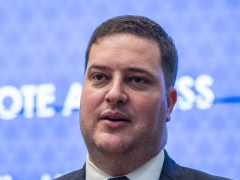
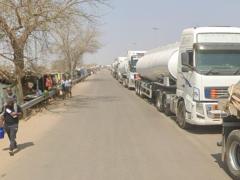
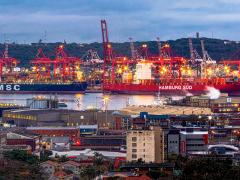
The country’s abnormal road transport industry hardly works in a “free and fair market”, according to Carl Webb of Durban-based Project Logistics Management. One thing that precludes that, he told FTW, is that the provincial TRH 11 (the transport rules for highways) “is changed what seems like every day, and just makes life more difficult”. Also, he noted that the requirements were not the same from province to province and country to country. “The result is that one always has increased costs that cannot be foreseen.” Added to that, Webb said, the hassle with the multi-purpose terminals at the port is an ongoing problem. “The problem is exactly the opposite of the one at the container terminals,” he said “At the DCT (Durban Container Terminal), you have to queue up for ages until you get to the gate. But once there, you go through the terminal in minutes. “But at the Point ro-ro terminal you get through the gate right away, but then have to wait an age till you get through the terminal.” This, he added, was because of a shortage of handling equipment, particularly for containerised cargoes. “In typical TPT fashion, they have upgraded the oceanside of things with brand-new mobile cranes for ship loading and unloading, but not the landside. As usual, this stems from the historic TPT conviction that the shipping lines are their customers, when in fact it’s the cargo owners.” At the Maydon Wharf multipurpose terminal it’s just as bad, according to Webb. He also said that escorts for abnormal loads were becoming problematic, as there was often a shortage of available traffic officers. “It can take four weeks to travel under RTI (Road Traffic Inspectorate) escorts from Durban to Gauteng due to a shortage of manpower.” CAPTION Carl Webb ... escorts for abnormal loads becoming problematic.
Bureaucracy and equipment shortages vex project cargo specialists
Comments | 0
© Now Media. This content is protected by copyright and may not be adapted or republished. If you would like to discuss cooperation opportunities, please contact: editor@freightnews.co.za.