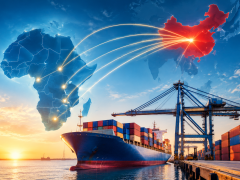
Post-war Angola, the Democratic Republic of Congo, Zambia and Nigeria all continue to grow beyond expectations despite the world facing yet another economic meltdown. Oscar S Muyatwa of the Trans Kalahari Corridor Secretariat, a Section 21 organisation founded on a Public Private Partnership (PPP) model, with the objective of increasing transit traffic and trade on the Trans Kalahari Corridor, maintains that in spite of the African market’s negligible share of global trade, it remains an essential source of agricultural and raw materials and mineral resources including platinum, manganese, copper, zinc, gold, and diamonds. “On the one hand Africa is a consumer market for commodities such as secondhand vehicle imports and electronics. The buying power of populous countries such as Nigeria, Kenya and the Democratic Republic of the Congo cannot be ignored. Nigeria, Ghana and Angola are oil producers of note. Namibia has offshore oil and gas prospects. The growing interest by China in African trade is testimony to the importance of the African market,” he told FTW. The biggest challenge however lies in dealing with African logistics and customs. “Each region has its own set of rules and regulations and one must have the ability to adapt to be able to work in the different areas,” he said. “A common challenge that one faces in Africa is the lack of infrastructure, while safety and security remain a concern. Corruption, congestion and unpredictable policy shifts are also problematic. All these unfortunately result in the high cost of doing business and the high price of goods across the continent.” According to Muyatwa, growing democratic governance, peace and stability, along with the growing buying power resulting from exports of raw materials and minerals, bodes well for Africa. “Modernisation in general is a great opportunity for everyone working in Africa, resulting in a very positive outlook for the continent,” said Muyatwa. “This is particularly true if Africa industrialises and thus exports finished products – and if regional integration serves as a bargaining chip in improving the general terms of trade between Africa and the European Union and the rest of the world. “There is a need to use growing Africa-China trade as leverage in dealing with the Americas and Europe. Africa should however adopt modest policies and regulations to attract direct foreign investment.”
Biggest challenge lies in dealing with logistics and customs
Comments | 0
© Now Media. This content is protected by copyright and may not be adapted or republished. If you would like to discuss cooperation opportunities, please contact: editor@freightnews.co.za.