Durban port has the
potential to become
the “Rotterdam of
sub-Saharan Africa”
but to achieve this a strategy
that includes benchmarking
operations against the best ports
in the world must be developed.
At a recent Transport Forum
focusing on trade facilitation
held in Durban, transporters,
cargo owner representatives
and Transnet Port Terminals
officials highlighted the
current performance of the
port compared to world class
international ports, showing
that it still has a long way to go.
Durban transporter and
former chair of the Durban
Harbour Carriers’ Association,
Kevin Martin, said the port
could learn from Rotterdam
which was probably able to offer
cheaper shipping rates to their
local importers and exporters
because of the high volumes of
cargo handled.
“We need a strategy to make
Durban the Rotterdam of sub-
Saharan Africa because 60%
of all container traffic goes
through it,”
Martin said.
However,
he added
that while
the harbour
mouth had
been widened
several
years ago to
accommodate
new generation
vessels, berths
still needed to
be deepened
to grow traffic and congestion
problems had to be fixed.
“When that becomes a
reality shipping lines will want
to execute a ‘one port call’
strategy, again playing into the
Rotterdam concept, on the SA
seaboard and that will also help
us to establish local shipping on
the west and east coast which is
part of the national strategy.”
Martin said a quick analysis
of Durban, its equipment and
available land,
compared to
the top ports of
Kelang, which
moved between
eight and nine
million TEUs
a year, and
Shanghai which
moved 28 million
TEUs, showed
that it was
possible for the
port to improve
productivity,
although it had a long way to go.
Durban port’s productivity
declined from a peak of 2.7
million TEUs in 2015 to 2.6
million in 2016 with a further
decline or f latline expected in
2017.
Kelang does almost 300 000
container moves per crane per
annum, Shanghai, which has
400 ship to shore cranes does
approximately 55 000 and
Durban does between 110 000
and 115 000.
Martin said Kelang had
managed to move much higher
volumes with 26 ship to shore
cranes, only four more than
Durban which had 22 for the
period reviewed. However, he
said maintenance down time
was impacting productivity
to the extent that there were
usually now only 10-12 cranes
operational out of the current
f leet of 17, highlighting the need
for a sustainable maintenance
plan.
“On the land we have presently
allocated to port we should be
doing 18 million containers
through that land, not 2.5 to 3
million so that needs attention,”
he said.
Martin added that the rail
facility, designed for 1200 moves per
day, was working at 50% capacity,
averaging 650 moves.
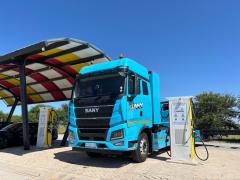
However, he said Transnet had
implemented good strategies
and workgroups to deal with
the congestion, including the
piloting of a non-mandatory
truck appointment system from 1
August, after the port experienced
major congestion last May when
truckers threatened to blockade it.
“We are moving in the right
direction,” he said.
Citrus Growers’ Association
of Southern Africa logistics
development manager Mitchell
Brooke said a Ports Regulator
of South Africa port capacity
and utilisation report had
shown gross crane moves per
hour (GCH) had declined from
highs of 27 GCH
on Pier 1 and 28
GCH on Pier 2 in
2012 to 22 and
24, respectively
in 2014. Far
East ports such
as Shanghai,
Ningbo, Nhava
Sheva and
Quingdao
achieve between
77 and 80 GCH.
“Our ports are
achieving around a third of the
productivity that some of the
major terminals around the
world are achieving. In terms
of productivity the terminals
actually have a long way to go to
get to world class status.” Brooke
said.
Transnet Port Terminals
chief information officer
Deirdre Ackermann agreed
it was important to compete
internationally rather than
striving to be the best in Africa.
“We know
we use world
class systems
and from
a technical
perspective
we are really
well positioned
to be able
to fulfil the
requirements
everyone
is putting
forward today.
And if we look at growing into
Africa, if we don’t have the vision
to be the Rotterdam of southern
Africa we are not going to be able
to compete in any meaningful
manner,” Ackermann said.
INSERT AND CAPTION
Kelang managed to move
much higher volumes with
26 ship to shore cranes,
only four more than Durban
which had 22 for the period
reviewed.
– Kevin Martin
INSERT AND CAPTION
Our ports are achieving
around a third of the
productivity that some of
the major terminals around
the world are achieving.
– Mitchell Brooke
CAPTION
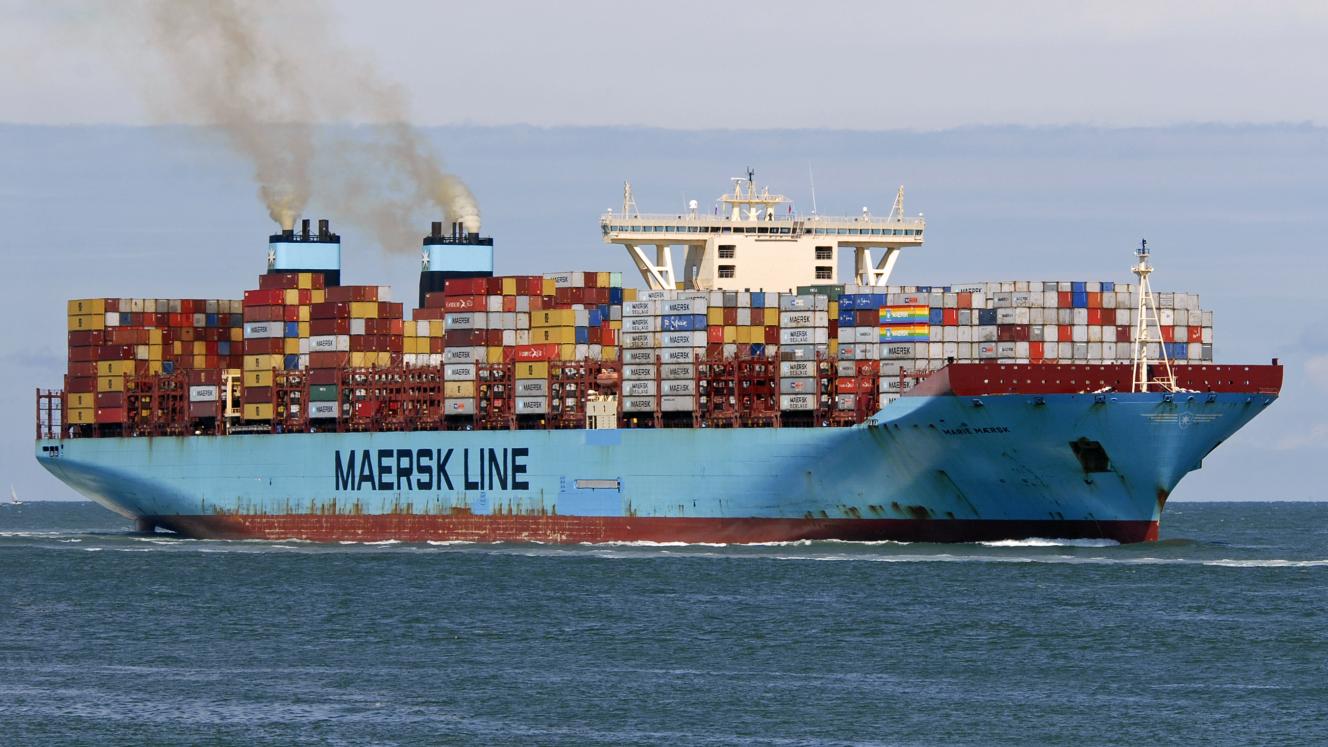
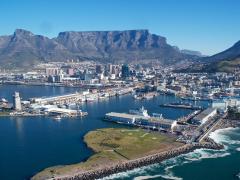
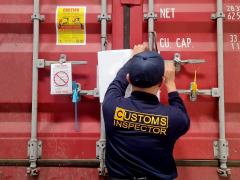
The Port of Durban ... non-mandatory truck appointment system will address
congestion issues.
‘Benchmark against the best to achieve world class status’
Comments | 0
© Now Media. This content is protected by copyright and may not be adapted or republished. If you would like to discuss cooperation opportunities, please contact: editor@freightnews.co.za.