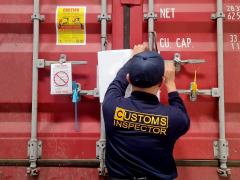
When making the decision to import goods into South Africa, it is best to investigate all the issues surrounding the particular product you wish to import e.g. whether an import permit is required, any restrictions that may be placed on the importation of that particular product etc. You may wish to engage the services of a customs specialist in this regard. There are various barriers in place to reduce/regulate the import of certain products into South Africa. The primary reason for these barriers is to protect and stimulate local industries and to protect jobs. There are two main types of barriers to trade, namely tariff barriers and nontariff barriers. The International Trade Administration Commission (ITAC) is the government body tasked with implementing and maintaining (where necessary) these tariff barriers. Tariff barriers, as the name suggests, involve the imposition of a duty on imported goods. This duty can be reduced or increased on application to ITAC, provided the application is properly motivated. There are various types of duty including customs duty, excise duty, anti-dumping duty, countervailing duty and safeguard duty. According to the World Trade Organisation (WTO) non-tariff barriers include import licensing, valuation, preshipment inspection to name a few. In South Africa there are two types of import licences. The first is when you must register as an importer with the South African Revenue Services and the second is where a particular product e.g. textiles or second-hand items are imported. You may be required to obtain an import licence/permit from ITAC before being allowed to import such goods into the country. When it comes to valuation, the Word Trade Organisation has developed the WTO Agreement on Customs Valuation which aims for a fair, uniform and neutral system for the valuation of imported goods. The Agreement does not permit the use of arbitrary or fictitious customs values and provides a set of valuation rules setting out how the customs value can be ascertained under various circumstances. According to the WTO, preshipment inspection is “the practice of employing specialised private companies (or ‘independent entities’) to check shipment details – essentially price, quantity and quality – of goods ordered overseas.” This barrier is mostly used by governments in developing countries to prevent capital flight, duty evasion and fraud, and to assist with a lack of capacity within the local Customs Authority. (There is an independent review procedure administered by the International Federation of Inspection Agencies and the International Chamber of Commerce.) We have discussed just a few of the barriers you may face when importing goods into the country. Therefore as mentioned at the outset, we strongly recommend that you consult with specialists in this field prior to making a decision to import goods.
Barriers to trade
Comments | 0
© Now Media. This content is protected by copyright and may not be adapted or republished. If you would like to discuss cooperation opportunities, please contact: editor@freightnews.co.za.