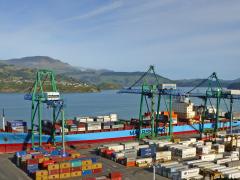
Importing of project cargo remains a major concern and challenge especially due to insufficient handling equipment and berthing delays, says Carl Webb, managing director of Project Logistics Management (PLM). “Knowledge, experience and planning are crucial to project logistics, but importing abnormal cargo is very challenging – especially when the goalposts are continuously being moved by the port operators.” Webb says due to a lack of suitable handling equipment at the South African ports, they are now required to land the cargo direct to trailer. “Berthing delays are the norm resulting in vehicles standing idle waiting to load,” he told FTW. “We recently had an experience of a vessel being delayed in berthing for four days, incurring demurrage in excess of R 500 000.” According to Webb abnormal permit restrictions and implementation of archaic regulations have resulted in transport costs spiralling upwards. “South Africa has one of the highest landside logistics costs in the world, yet the abnormal load regulations are creating even higher costs. One example of this is the fact that abnormal vehicles are not permitted to transport normal cargo on the empty leg of a trip,” he said. “This results in the vehicles having to travel empty to their bases or load points, not only increasing the number of heavy vehicles on the already overtaxed national road infrastructure, but wasting thousands of litres of diesel, with the resultant pollution. This is senseless, but the authorities will not see beyond the archaic regulations.” An example of the mindset can be seen in that the original abnormal permit is required to be in the vehicle transporting a load. Additional time and costs are then required to get the original permit to the vehicle, wherever it may be, in spite of IT being available to circumvent these outdated requirements. Despite this there are predicted areas of growth in the project cargo industry – especially in the petrochemical and power generation sectors. “Everyone is looking to the wind turbine power generation projects in the near future, but no announcements have been made confirming these projects as yet,” said Webb.
‘Archaic’ regulations push up transport costs
Comments | 0
© Now Media. This content is protected by copyright and may not be adapted or republished. If you would like to discuss cooperation opportunities, please contact: editor@freightnews.co.za.