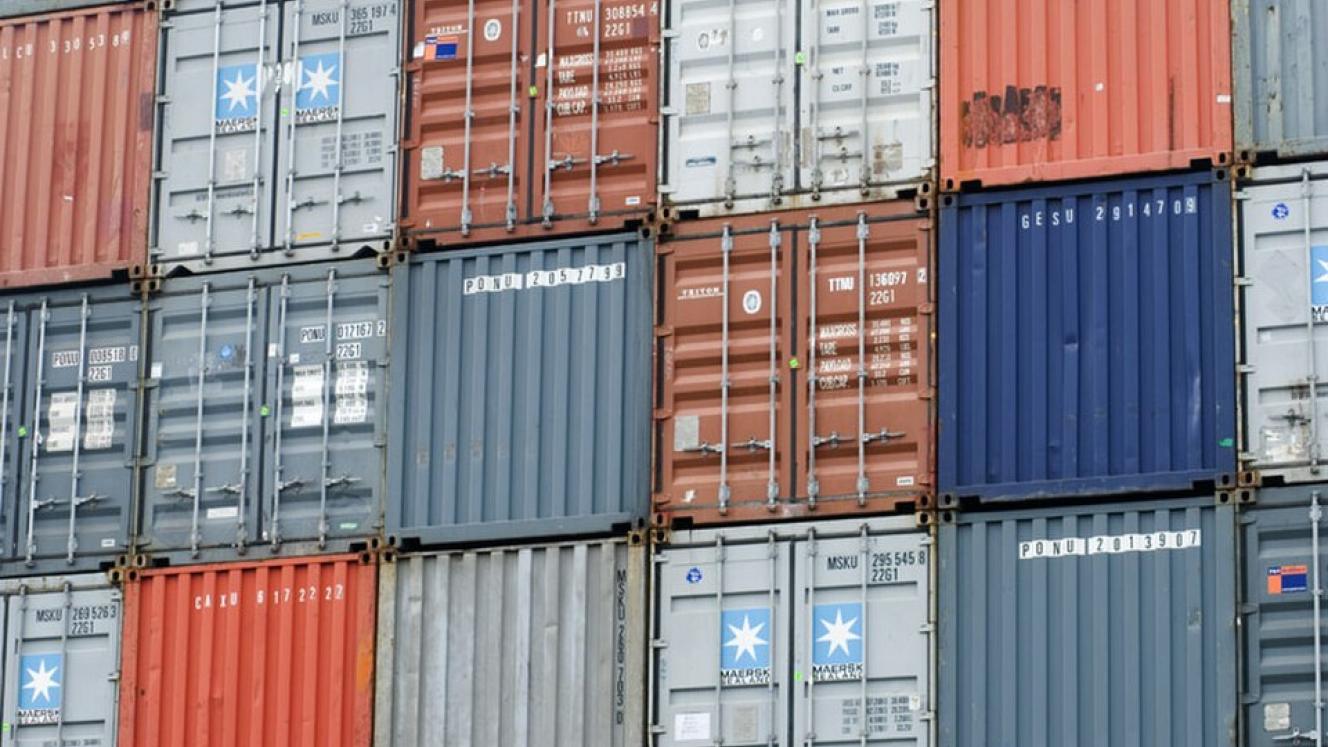
Ship shortage hampers growth TERRY HUTSON THINK SHIPPING along the coast of southern and East and West Africa and it's hard not to think of Ocean Africa Container Lines, as the former Unicorn services were renamed in 2004. The coastal service into Africa is such that OACL operates a fleet of eight vessels – five on the west coast to Angola and three up the east coast as far as Dar es Salaam. Captain Dave Rennie, managing director of OACL, explains that the west coast service from Durban includes the traditional South African coastal service taking in East London and Port Elizabeth before sailing from Cape Town to Walvis Bay as far as Luanda. The Angola container trade is growing at a rate of about 30% a year. “So long as there’s stability in the region this trade will continue to grow,” he says, describing Angola as ripe with opportunity. One of the challenges however remains congestion at Luanda, where port authorities continue to permit the storage of boxes within the port terminals. “There’s also insufficient infrastructure to handle the growing volume. The Angola government is aware of the issues but it needs a political will to give effect to terminal concessioning, which will bring in outside expertise. And if they would just up the current storage rate (for overdue boxes) it would clear the backlog in no time.” OACL employs 1 000 TEU vessels on this trade but Rennie expects the line to have to bring in even larger capacity ships in the future. On the east coast however ships are limited by tidal restrictions at Beira. “The volume is there, in fact we had to drop Mombasa to give us more time to handle the traffic.” He says the port of Maputo is brimming with opportunities, particularly for Gauteng freight which he sees accessing India and the Gulf through the Mozambique port. OACL also wants to introduce an Indian Ocean island service in the near future, although the biggest challenge, as with the remainder of the coastal trade, is the lack of smaller ships being built. “We need these with the growth of hub and spoke operations, and if it was not for the shortage of ships we’d probably have had an Indian Ocean island service operating by now.”
Angola ripe with opportunity
Comments | 0
© Now Media. This content is protected by copyright and may not be adapted or republished. If you would like to discuss cooperation opportunities, please contact: editor@freightnews.co.za.