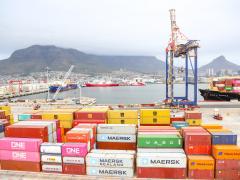
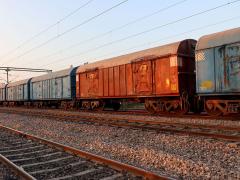
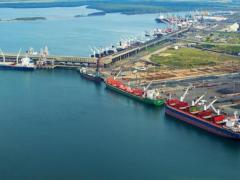
Angola is investing in six ports along its Atlantic coastline – Cabinda, Soyo, Lobito, Luanda, Amboim and Namibe. Cabinda A new US$20-million container quay is being constructed and is expected to be operational in 2012. Dredging is under way to remove an accumulation of silt. Some 60% of Angola’s oil is exported out of the northern port in the Cabinda province. Soyo Soyo is located on the southern bank of the Zaire River near the mouth. The port has three jetties: Two measuring 200m in length (each), and a 100m finger jetty. In 2010, a contract was signed to dredge the port and to maintain it until 2014. Luanda Luanda is Angola’s bestknown port – and one of the most congested in Africa. Francisco Venancio, chairman of the Luanda Port board of directors, announced in 2010 that the port authority had issued 20-year concessions to a number of operators, and that this had galvanised more than US$350 million investment in the harbour. The development of the dry port of Viana 25 kilometres from the harbour has helped relieve congestion. Luanda has four terminals and is naturally protected by Luanda Island. It is served by the Luanda railway, which last year began operating along a 400-km stretch of rehabilitated line between Luanda and the inland town of Malanje to the east. Built by the Portuguese, the line carried 300 000 tons of cargo in 1970. It was destroyed in the civil war, carrying just 54 tons in 1990. In November last year Angolan rail Caminhos de ferro de Luanda (CFL) started moving containers from the Luanda commercial port to the dry port in Viana in order to reduce congestion on the road. Lobito Lobito is a deep-water seaport, and the secondlargest in Angola. It can handle 2.7 million tons of cargo per year. Volumes are growing, 138 000 tons in 2006 to 2.2 million in 2010. A 10-hectare dry port has been built to relieve congestion and to prepare for additional volumes with the planned rebuilding of the Benguela railway. The railway leads from the southern mining centre in Lubumbashi in the Democratic Republic of Congo (DRC). A revival of the Lobito Corridor would have a direct impact on volumes through the ports of Dar es Salaam, Durban, Beira and Walvis Bay. The Corridor historically offered a shorter and hence faster access for exports to and imports from Europe. The Benguela Railway was designed to provide a cheap transportation route for the copper, cobalt and manganese mined in Angola, DRC and Zambia. Trade has subsequently shifted to the east, but it may still be more cost-effective to use the West African port – provided it is efficient. It will offer competition to the Tazara rail line and port of Dar es Salaam. Amboim A shipyard with a 250 metrelong dock has been opened in Porto Amboim, in Angola’s Kwanza Sul province, as part of a US$150 million investment by Angolan company Cenbir and Dutch company Heerema Marine Contractors. The shipyard has two 300-ton cranes, two transport rafts and a tug. Heerema provides services to offshore oil and gas companies. Angolan oil and fuel company Sonangol and SBM Shipyard have invested a further US$208.3 million in the shipyard. Namibe (formerly Moçamedes) Investment in the southern port has seen both volumes and revenues grow. In the first phase of the rehabilitation of the 1957-vintage port, 240 metres of the dock and adjacent areas were repaired at a cost of US$3.2 million
Angola invests big in six ports
Comments | 0
© Now Media. This content is protected by copyright and may not be adapted or republished. If you would like to discuss cooperation opportunities, please contact: editor@freightnews.co.za.