Latvian authorities are investigating damage to a subsea fibre-optic cable between its Port of Liepāja and Lithuania’s Port of Šventoji on the Baltic Sea.
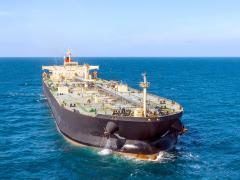
The incident, reported on January 2, raised suspicions of a vessel altering course over an active cable before docking at Liepāja, The Maritime Executive reported.
Police boarded the ship on January 4, interviewed the cooperating crew, but had found no direct link by Monday.
However, because of sporadic but unconfirmed reports of deliberate anchor dragging to wilfully disrupt connectivity infrastructure in the area, two other vessels are also docked for checks and the probe continues.
Last year, Reuters reported that multiple 2025 incidents in the Baltic Sea had involved commercial vessels suspected of deliberately dragging anchors over cables.
The incidents fuelled sabotage concerns amid Russia-Ukraine tensions.
No confirmed naval vessel cases emerged, but patterns point to ‘shadow fleet’ tankers and cargo ships from Russia-linked ports.
Before the most recent incident on December 31, Finnish police detained the St. Vincent-flagged cargo ship Fitburg, en route from St Petersburg in Russia to Haifa in Israel, after it damaged an Elisa telecom cable in Estonia's EEZ.
Investigations revealed that the vessel’s anchor chain was submerged and some of the crew, including Russian seafarers, faced sabotage probes.
Newsweek reported that, on the same day, a second ‘Arelion cable’ had failed.
In November, two Baltic Sea cables were damaged in one day, respectively severing and affecting connectivity for Germany, Finland, Lithuania, Latvia, Estonia and Sweden.
Pål Jonson, Sweden's Minister for Defence, has repeatedly labelled Baltic Sea undersea cable damage as sabotage.
As far back as November 2024, he described cuts to Sweden-Germany and Sweden-Lithuania cables as “gross sabotage”, and similar statements followed incidents in late 2025, including the Finland-Estonia and Sweden-Latvia cases.
Since 2023, there have been more than 10 Baltic Sea undersea cable incidents, often cause by ‘black fleet’ vessels accused of anchor dragging.
It has led to regular Baltic Sentry patrols by NATO, and evolving patterns of deliberate disruption to subsea cabling by maritime vessels with dubious flag registration and ownership, The New York Times has reported.
Suspicions target Russia for hybrid warfare, though proof remains elusive.
Similar incidents in the Taiwan Strait have also been reported.