There are concerns that
the ambiguous wording
around the proposed
new road regulations
– expected to be
implemented by December
31 this year – could lead
to misinterpretation by
shippers and increase their
liability should an accident
occur.
Carol Holness
senior associate at law
firm, Norton Rose
Fulbright, pointed
out that Regulation
330D prohibited the
transportation of goods
on a public road “unless
such transportation is fully
insured for damages that
can occur as a result of an
accident”.
Holness pointed out that
there was a perception
that this applied to the
goods themselves needing
to be “fully insured” and
that shippers merely had
to ensure that they had
comprehensive insurance
on their goods only.
But this is misleading,
said transport specialist,
Kathy Bell. “This actually
means that shippers
(consignees or consignors)
need to be fully insured
for the impact caused by
the carriage of the goods
should an accident occur
– and not just the goods
themselves,” she said.
Norton Rose Fulbright’s
Peter Lamb agreed,
saying the term “fully
insured” was too vague
to be enforceable as
there were different
risks involved with the
transportation of goods.
“A road accident can cause
damage to the vehicle
transporting the goods,
the goods themselves, road
infrastructure, vehicles
driven by other road users
and pedestrians.”
He pointed out that such
an accident could give rise
to indirect damages and
lawsuits such as economic
loss caused by the delay of
the delivery of the cargo.
“This list is endless and
not every possible loss can
be insured,” said Lamb.
He suggested that
road transporters should
simply procure the cover
reasonably required
of a carrier in the
circumstances – where the
cargo owner has Goods-
In-Transit (GIT) insurance
in respect of his goods and
the carrier has carrier’s
liability insurance and
motor vehicle insurance.
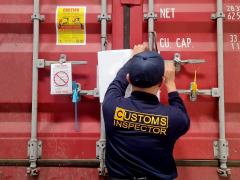
CAPTION
A road accident can cause damage to the vehicle transporting the goods, the goods
themselves or the road infrastructure.
'Ambiguous' new road regs raise insurance concerns
Comments | 0
© Now Media. This content is protected by copyright and may not be adapted or republished. If you would like to discuss cooperation opportunities, please contact: editor@freightnews.co.za.